

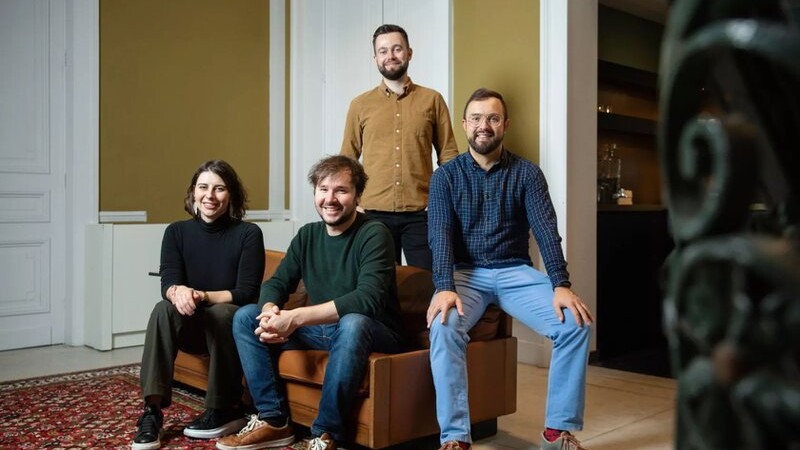
Belgian cybersecurity company Aikido has raised $60 million in a Series B funding round, reaching a $1 billion valuation and securing its place among the world’s newest unicorns. The round was led by DST Global, with participation from PSG Equity, Singular, Notion Capital, and a broad group of European and international investors.
The milestone comes just three years after Aikido was founded, making it the fastest European cybersecurity company to reach unicorn status. The raise follows a year of rapid expansion, marked by fivefold revenue growth and nearly three times growth in its customer base.
A developer first approach to modern security
Aikido is a developer led cybersecurity platform designed to help software teams find, prioritise, and fix security issues across their entire stack. The platform covers code, supply chain, cloud infrastructure, runtime, and testing within a single system, removing the need for multiple disconnected tools.
Built by developers for developers, Aikido focuses on reducing noise and complexity. Instead of flooding teams with alerts and dashboards, it aims to provide clear answers to a simple question that matters to engineers and leaders alike: are we actually at risk.
Rapid growth driven by bottom up adoption
Over the past year, Aikido has recorded five times revenue growth and almost tripled its number of customers. The platform is now used by more than 100,000 teams worldwide, including organisations such as the Premier League, SoundCloud, Niantic, and Revolut.
This growth has been driven by a bottom up go to market strategy, with developers adopting the product directly before it expands across organisations. A freemium model has helped Aikido gain traction in competitive environments, where value needs to be proven quickly and consistently.
Closing the loop from detection to remediation
A key differentiator for Aikido is its focus on automation and context. Rather than stopping at detection, the platform uses code and application level insight to triage and remediate vulnerabilities as they appear, from development through to production.
According to the company, this approach turns security into an engineering system rather than a reporting exercise. By correlating risk across the stack, teams can focus on fixing issues that matter, rather than managing alerts that do not.
Moving towards self securing software
As software development accelerates, with AI generated code and autonomous agents becoming more common, Aikido is investing in what it describes as self securing software. The company has launched Aikido Attack, an AI driven penetration testing capability designed to identify and validate vulnerabilities at machine speed.
The system deploys multiple specialised agents to test applications, confirm exploits, and support remediation and retesting. Over time, Aikido plans to embed continuous and autonomous testing directly into feature releases, helping teams close the build test fix cycle.
Backed by global and European investors
The Series B round was led by Tom Stafford at DST Global and includes new and existing investors from across Europe and beyond. Continued backing from Notion Capital, Singular, Syndicate One, Entourage, Connect Ventures, and Innovia Capital underlines confidence in Aikido’s long term vision.
The round also attracted individual investors from the European technology ecosystem, including founders and operators behind companies such as Vanta, Henchman, Showpad, Wintercircus, Lighthouse, Silverfin, and Revolut.
Scaling from Europe to the global stage
Aikido’s rise stands out in an industry long dominated by US and Israeli cybersecurity firms. Founded by a European team outside major tech hubs, the company has grown to a team of around 180 people, including more than 20 former founders, and now ships dozens of product updates each day.
With its latest funding, Aikido plans to continue expanding globally while deepening its platform capabilities. The company’s trajectory is increasingly seen as proof that Europe can build and scale world class cybersecurity software on a global stage, using a developer first model and a focus on real engineering outcomes.
Also Read: London-based incentifi raises €174k pre-seed to pilot wellbeing rewards platform