

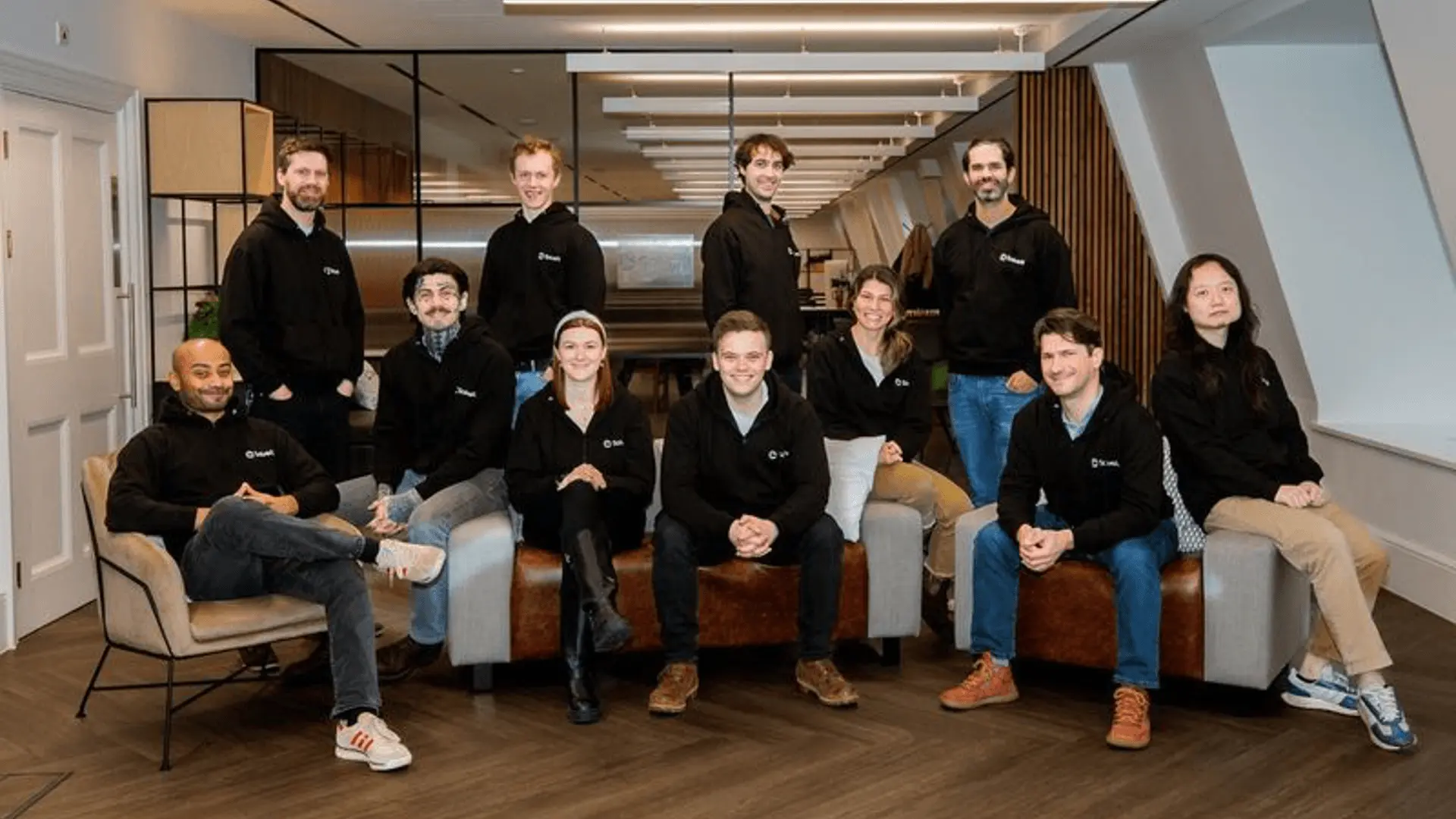
London-based SolveAI has raised $50 million in funding to expand its enterprise AI platform that enables employees to build full-stack software applications using natural language, without requiring programming expertise. The financing includes a $45 million Series A round led by GV (Google Ventures) and a previously undisclosed $5 million pre-seed round led by Accel. Additional investors include Northzone, Mantis VC, NeverLift, and several strategic angel investors such as Mike LoSapio, Chief Information Security Officer at Palantir, Pushmeet Kohli, and Olivier Godement.
The funding marks one of the larger early-stage rounds in Europe’s emerging enterprise AI infrastructure segment, reflecting growing investor confidence in platforms designed to modernise how organisations develop internal software. SolveAI focuses specifically on enabling non-technical employees to create secure, scalable enterprise applications that integrate directly with existing corporate systems, data sources, and governance frameworks.
Founded by former Palantir engineer to address enterprise software bottlenecks
SolveAI was founded in July 2025 by Steve Basher, a former engineer at Palantir, where he worked on large-scale data and enterprise software deployments. His experience highlighted a persistent gap between enterprise operational needs and the speed at which internal software could be developed and deployed.
In many large organisations, internal teams rely on custom-built applications to manage workflows across operations, finance, logistics, and customer management. However, these tools often require dedicated development resources, lengthy procurement processes, and extensive integration work with legacy infrastructure. This creates bottlenecks, particularly when employees closest to operational inefficiencies lack the technical capability or authority to build tailored solutions.
Basher founded SolveAI to enable domain experts themselves to create enterprise-grade software while maintaining strict security, compliance, and governance standards required by large organisations.
Natural language interface generates full-stack enterprise applications
SolveAI’s platform allows employees to describe the software they need using natural language. The system then generates a structured proposal outlining the intended functionality, business logic, integration requirements, and technical architecture. This proposal includes detailed implementation plans, such as how the application will connect to internal databases, enterprise resource planning systems, or customer relationship management platforms.
Once approved and refined by the user or IT team, SolveAI deploys specialised AI agents that handle different stages of the software development lifecycle. These agents manage user interface design, frontend and backend logic, database integration, and deployment processes, producing a fully functional application that meets enterprise performance and compliance requirements.
This approach allows organisations to create customised internal tools significantly faster than traditional development cycles, which often take months or years. By enabling secure integration with existing infrastructure, SolveAI ensures applications can operate within established enterprise environments without introducing security vulnerabilities or governance risks.
Enterprise demand growing for secure AI-powered software generation
The rise of AI-assisted coding tools has accelerated software development across industries, but most existing solutions remain focused on developers or small teams. Enterprise environments present significantly more complex requirements, including integration with legacy systems, adherence to regulatory standards, and compatibility with existing IT architectures.
SolveAI addresses these constraints by embedding governance, auditability, and infrastructure compatibility directly into its platform. This makes it suitable for regulated industries such as financial services, manufacturing, healthcare, and retail, where security and reliability are critical.
The platform also helps reduce reliance on external software vendors and legacy custom-built applications, which often require ongoing maintenance costs and lack flexibility. By enabling internal teams to build and modify software directly, organisations can respond more quickly to operational changes and evolving business requirements.
Investors back SolveAI’s potential to reshape enterprise software development
The participation of major venture firms including GV, Accel, and Northzone underscores growing investor conviction in enterprise AI platforms that automate complex software creation. Strategic angel investors with experience in enterprise security and infrastructure, including Palantir’s Mike LoSapio, further reinforce the company’s positioning in high-security enterprise environments.
Steve Basher, CEO and founder of SolveAI, said the company was designed to ensure enterprise AI development reflects real-world operational complexity rather than simplified developer workflows.
“Organisations see the greatest impact when technology is tailored to their specific needs. Enterprises are eager to capitalise on the AI coding wave, but few products fully reflect the complexity, regulatory demands, and scale at which large companies operate,” Basher said.
He added that SolveAI enables employees closest to operational challenges to build solutions directly, reducing delays and improving productivity while maintaining enterprise-grade controls.
Funding to support platform expansion and enterprise adoption
SolveAI plans to use the new funding to expand its engineering capabilities, enhance its AI agent architecture, and accelerate adoption across enterprise customers. The company is also expected to invest in strengthening integrations with major enterprise platforms, expanding security features, and scaling its infrastructure to support large-scale deployments.
As enterprises increasingly prioritise automation, operational efficiency, and digital transformation, platforms that enable faster, secure software development without requiring extensive engineering resources are expected to play a growing role in enterprise IT strategy.
SolveAI’s approach positions it within a rapidly emerging category of enterprise-native AI platforms designed not to replace developers, but to expand software creation capabilities across entire organisations, enabling faster innovation while maintaining the reliability and security standards required by large-scale businesses.
Also Read: Allica Bank becomes UK fintech unicorn after $155 million Series D funding round