

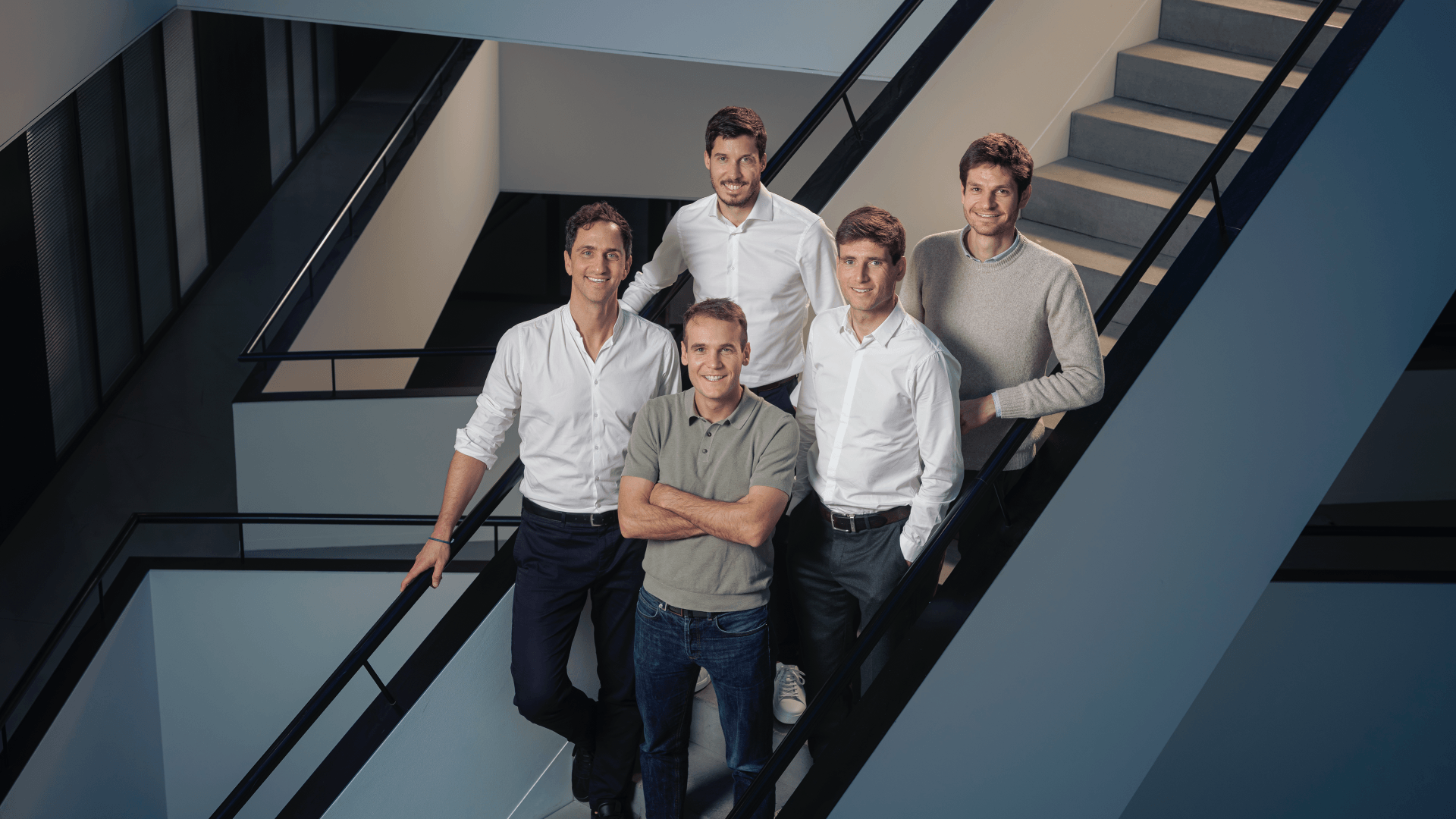
Neural Concept is a Lausanne, Switzerland-based AI platform and leader in Engineering Intelligence powering next-generation product development. Founded in 2019 and spun out of the Swiss Federal Institute of Technology (EPFL), the company has raised a total of $140 million across three funding rounds, with its most recent $100 million Series C led by Growth Equity at Goldman Sachs Alternatives in December 2025.
The Neural Concept platform redefines engineering workflows with CAD-native enterprise AI that understands geometry, constraints, and design intent. By helping customers build and deploy physics-aware design copilots, the platform enables engineering teams to explore millions of design options earlier in the development process and avoid costly late-stage changes. This approach accelerates product development cycles, helping companies bring better products to market faster whilst dramatically reducing redesign costs.
The Founding Story: From EPFL Research to Commercial Success
Dr Pierre Baqué: CEO and Founder
Dr Pierre Baqué founded Neural Concept in 2019 following his PhD in Computer Science at the École Polytechnique Fédérale de Lausanne (EPFL), where he focused on developing powerful and flexible algorithms combining probabilistic inference with modern machine learning methods. His doctoral research applied deep learning to computer vision and numerical simulations, laying the technical foundation for Neural Concept’s approach to AI-powered engineering.
Baqué’s journey to founding Neural Concept began with engineering degrees in Applied Mathematics and Operations Research from École Polytechnique in Paris, followed by work as an engineer at Credit Suisse in London developing algorithmic trading tools. However, his passion for applying machine learning to complex problems drew him back to academia, where he joined EPFL’s Computer Vision Laboratory in 2014.
During his PhD research, Baqué recognised a fundamental disconnect in how engineering teams approached product development. Traditional computer-aided design (CAD) and computer-aided engineering (CAE) tools, whose fundamental approaches dated back to the 1960s, had seen only incremental improvements despite massive advances in computational power and machine learning capabilities. Meanwhile, engineers spent months running simulations and iterating designs, often discovering critical problems late in development when changes became extraordinarily expensive.
Théophile Allard: CTO and Co-Founder
Théophile Allard serves as Chief Technology Officer and co-founder, bringing complementary technical expertise to Neural Concept’s platform development. Allard’s background in software engineering and system architecture has proven essential for translating Baqué’s research innovations into robust, scalable enterprise software capable of handling the demanding requirements of major industrial companies.
Thomas von Tschammer: General Manager USA and Co-Founder
Thomas von Tschammer joined as co-founder and General Manager for the United States, recognising that American markets represented critical growth opportunities for Neural Concept. Von Tschammer’s role focuses on establishing Neural Concept’s presence in the US, building relationships with American automotive, aerospace, and technology companies, and adapting go-to-market strategies for North American customers.
Early Development and Validation
Between May and December 2018, whilst still operating within EPFL, Neural Concept’s team completed four pilot projects with major actors in the aerospace and automotive industries. The success of these pilot projects demonstrated that the technology delivered meaningful value to sophisticated engineering organisations, setting the company on a growth trajectory and validating the decision to spin out as an independent commercial entity.
Most team members from the EPFL research group joined the startup when it formally incorporated in 2019, bringing deep technical expertise and shared conviction in the transformative potential of AI-powered engineering intelligence. This strong technical foundation enabled Neural Concept to rapidly advance from research prototype to commercial product capable of serving demanding enterprise customers.
Neural Concept Goldman Sachs Series C: Record Funding for European EngineeringTech
Series C Funding Details
On December 18, 2025, Neural Concept announced the close of a $100 million Series C funding round, one of the largest financing rounds for an AI-powered engineering platform in Europe. Growth Equity at Goldman Sachs Alternatives led the round, with participation from existing investors Forestay Capital, Alven, HTGF (High-Tech Gründerfonds), D.E. Shaw Ventures, and Aster Capital.
This substantial raise brings Neural Concept’s total funding to $140 million and positions the company for aggressive global expansion, particularly in the United States market where the company sees enormous growth potential. The Neural Concept Goldman Sachs partnership represents strategic validation from one of the world’s premier financial institutions, signalling confidence in both the technology and the market opportunity.
Lambert Diacono, Executive Director Growth Equity at Goldman Sachs Alternatives, commented on the investment: “Neural Concept’s technology represents a rare leap forward in enterprise engineering AI.” Christian Resch, Partner and Head of EMEA Growth Equity at Goldman Sachs Alternatives, added: “As demand accelerates for AI that drives real impact in complex industrial workflows, Neural Concept is emerging as one of the leading companies in the market.”
Goldman Sachs Alternatives manages over $500 billion in assets across private equity, growth equity, private credit, real estate, infrastructure, sustainability, and hedge funds. Since 2003, Growth Equity at Goldman Sachs Alternatives has invested more than $13 billion in growth-stage, technology-driven businesses across multiple industries, providing Neural Concept with not just capital but strategic guidance and extensive network access.
Previous Funding Rounds
Neural Concept’s Series B funding round closed in June 2024, raising $27 million led by Forestay Capital with participation from D.E. Shaw Group and existing investors. This round enabled the company to accelerate product development, expand the team, and deepen market penetration across key verticals including automotive, aerospace, and energy.
Earlier funding came through seed and seed-extension rounds totalling approximately $13 million, with support from Constantia New Business (now Forestay Capital), High-Tech Gründerfonds, and other early-stage investors. The company also benefited from Swiss innovation support programmes, including Venture Kick, which provided early validation and non-dilutive funding during the spin-out phase from EPFL.
The progression from seed to Series C in just over five years demonstrates strong execution and market traction. Neural Concept achieved fourfold growth in enterprise revenue over the 18 months preceding the Series C announcement, validating both the product-market fit and the company’s ability to scale commercially.
Use of Series C Capital
Neural Concept plans to deploy the $100 million Series C funding across several strategic priorities:
- Generative CAD Development: Accelerating development of a breakthrough generative computer-aided design capability planned for launch in early 2026. This innovation will enable engineers to describe design requirements in natural language or high-level specifications, with the AI automatically generating optimised 3D geometries that satisfy constraints whilst maximising performance.
- Global Expansion: Expanding global go-to-market teams with specific focus on growth in the United States, where Neural Concept sees substantial untapped demand across automotive, aerospace, defence, and technology sectors. The company aims to establish a significant US presence with local sales, support, and customer success teams.
- Ecosystem Partnerships: Deepening existing collaborations with industry leaders including NVIDIA (Omniverse integration and GPU acceleration), Siemens (CAD and PLM integration), Ansys (simulation platform connectivity), Microsoft (Azure cloud infrastructure), and AWS (additional cloud deployment options).
- Platform Development: Continuing to enhance the core platform capabilities, expanding the range of physics domains supported, improving user experience and accessibility, and developing industry-specific solutions tailored to vertical market requirements.
Impressive Customer Base and Use Cases
Global Manufacturing Leaders
Neural Concept serves over 50 global companies across automotive, aerospace, energy, consumer electronics, semiconductors, and defence industries. The customer roster includes household names demonstrating the platform’s ability to deliver value to the world’s most sophisticated engineering organisations.
General Motors uses Neural Concept to accelerate vehicle development, optimising aerodynamics, thermal management, and structural performance across multiple vehicle programmes. The platform enables GM to explore far more design alternatives early in the development process, reducing late-stage changes and accelerating time to market.
General Electric Vernova, GE’s energy business, applies Neural Concept to optimise turbine designs and other energy generation equipment. The ability to rapidly evaluate design variations whilst considering multiple performance criteria simultaneously has proven particularly valuable for complex energy systems where trade-offs between efficiency, cost, durability, and other factors require sophisticated optimisation.
Safran, the French aerospace and defence company, leverages Neural Concept for aircraft engine component optimisation and other demanding aerospace applications where performance improvements translate directly to fuel efficiency, operating costs, and environmental impact.
Formula 1 Racing Teams
Multiple Formula 1 teams employ Neural Concept to gain competitive advantages through superior aerodynamic development. In F1, where regulations tightly constrain many aspects of car design and teams compete for fractions of a second per lap, the ability to optimise aerodynamics more quickly and thoroughly than competitors provides crucial performance differentiation.
Neural Concept enables F1 teams to evaluate thousands of wing profiles, underbody designs, and other aerodynamic surfaces far more quickly than traditional CFD approaches allow. The platform’s ability to suggest non-intuitive geometric features that improve downforce whilst reducing drag has helped teams discover performance gains they might have missed using conventional development methods.
The F1 use case demonstrates Neural Concept’s capability at the extreme end of engineering sophistication, where customers possess world-class simulation and engineering expertise yet still gain significant value from AI-augmented workflows.
Strategic Partnerships and Ecosystem Integration
NVIDIA Collaboration
Neural Concept’s partnership with NVIDIA encompasses multiple dimensions. The company leverages NVIDIA GPUs for training deep learning models and running inference, benefiting from continuous improvements in GPU performance and AI-specific features. The integration with NVIDIA Omniverse Blueprint enables real-time digital twins, allowing engineers to visualise and interact with AI-optimised designs in photorealistic 3D environments.
This partnership positions Neural Concept to benefit from NVIDIA’s massive investments in AI infrastructure and ecosystem development, whilst providing NVIDIA with a compelling use case demonstrating enterprise AI applications beyond traditional machine learning workloads.
Siemens Integration
The partnership with Siemens, one of the world’s leading engineering software providers, validates Neural Concept’s technology and provides access to Siemens’ enormous customer base. Integration with Siemens NX (CAD), Teamcenter (PLM), and other Siemens Digital Industries Software products enables seamless workflows where engineers can leverage AI-powered optimisation without leaving familiar tools.
For Siemens, the partnership provides access to cutting-edge AI capabilities that enhance the value proposition of its software suite, helping the company remain competitive as customer expectations for AI integration grow.
Ansys Simulation Platform
Neural Concept integrates with Ansys, the leading provider of engineering simulation software, enabling customers to leverage their existing Ansys simulation data to train AI models whilst continuing to use Ansys tools for detailed validation and analysis. This integration acknowledges that AI-accelerated simulation complements rather than replaces traditional high-fidelity simulation, with each approach serving distinct purposes in the engineering workflow.
Cloud Infrastructure Partnerships
Partnerships with Microsoft Azure and AWS provide Neural Concept customers with flexible deployment options. Some customers prefer on-premises deployment for data security or performance reasons, whilst others prefer cloud-based solutions for scalability and reduced IT infrastructure requirements. Supporting both models ensures Neural Concept can serve customers regardless of their IT preferences and constraints.
Also Read: Destinus Drones: Funding, Technology and Europe’s Autonomous Flight Push
Competitive Landscape and Market Position
Traditional CAD/CAE Software Vendors
Neural Concept competes indirectly with established engineering software companies including Dassault Systèmes (CATIA, SIMULIA), Siemens Digital Industries Software (NX, Simcenter), Ansys, Autodesk, and others. However, rather than displacing these tools, Neural Concept typically augments them, providing an AI intelligence layer that enhances existing workflows.
This positioning as complementary rather than competitive facilitates partnerships with established vendors and reduces customer resistance, as adoption doesn’t require abandoning substantial investments in existing tools and training.
AI-Powered Simulation Startups
Several startups pursue AI-accelerated simulation and design optimisation, including Monolith AI (UK-based, focuses on data-driven engineering), Neural Concept (competitor based in US, distinct from Neural Concept despite similar name), Desktop Metal’s LiveParts acquisition (AI-driven design for additive manufacturing), and various vertical-specific solutions targeting particular industries or physics domains.
Neural Concept differentiates through its focus on 3D geometry processing without parameterisation, broad applicability across multiple physics domains and industries, strong academic foundation from EPFL research, proven traction with major global enterprises, and substantial funding enabling aggressive scaling.
Technology Giants and Research Labs
Large technology companies including Google, Microsoft, Amazon, and others invest substantially in AI research including applications to engineering and simulation. However, these efforts generally remain research-focused rather than commercialised products. Neural Concept’s dedicated focus on engineering intelligence, deep domain expertise, and customer relationships provide competitive advantages despite smaller overall resources compared to tech giants.
Applications Across Industries
Automotive Engineering
- Aerodynamic optimisation for efficiency and performance
- Thermal management for powertrains and EV batteries
- Structural design balancing safety and weight reduction
- Faster development cycles amid EV transition and regulation
Aerospace and Defence
- Turbine blade and airframe aerodynamic optimisation
- Lightweight structural components for aircraft and spacecraft
- Rapid design iteration for defence and extreme environments
Energy Sector
- Turbine optimisation for gas, steam, and wind power
- Heat exchanger efficiency improvements
- Component design for renewable energy systems
Consumer Electronics and Semiconductors
- Thermal and antenna optimisation in compact devices
- Chip packaging and data centre cooling design
- Optimisation of semiconductor manufacturing equipment
The Road Ahead: Vision for AI-Native Engineering
Generative CAD Revolution
Neural Concept’s planned generative CAD capability, scheduled for early 2026 release, represents a fundamental shift in how engineers approach design. Rather than manually creating 3D geometries and iteratively refining them, engineers will describe requirements and constraints, with AI automatically generating optimised designs that satisfy specifications.
This approach promises to democratise advanced engineering optimisation, making sophisticated design capabilities accessible to engineers who may lack deep simulation expertise or access to expensive computational resources. It could also accelerate innovation by helping engineers discover non-intuitive solutions they might never conceive through traditional iterative approaches.
Scaling the Intelligence Layer
Neural Concept aspires to become “the intelligence layer powering every engineering team, worldwide”, as CEO Pierre Baqué described the vision. Achieving this ambition requires continuing platform development to support more physics domains, industries, and use cases, building an ecosystem where third-party developers extend the platform, establishing Neural Concept technology as the standard that others integrate with, and scaling the business to serve thousands of engineering organisations globally.
Frequently Asked Questions About Neural Concept
What industries can benefit from Neural Concept?
Neural Concept serves automotive, aerospace, energy, consumer electronics, semiconductors, defence, and other industries where product development involves complex 3D geometries and physics-based performance requirements. Any engineering organisation that uses CAD software and simulation tools can potentially benefit from AI-powered optimisation.
Who founded Neural Concept and where is the company based?
Dr Pierre Baqué founded Neural Concept in 2019 after completing his PhD at the Swiss Federal Institute of Technology (EPFL) in Lausanne. Co-founders include Théophile Allard (CTO) and Thomas von Tschammer (General Manager USA). The company remains headquartered in Lausanne, Switzerland, whilst expanding globally, particularly in the United States.
How much funding has Neural Concept raised?
Neural Concept has raised $140 million in total funding across multiple rounds: seed and seed-extension (~$13 million), Series B ($27 million in 2024), and Series C ($100 million in December 2025 led by Goldman Sachs Alternatives). The company achieved fourfold revenue growth in the 18 months before the Series C.
Can small companies afford Neural Concept's platform?
Neural Concept primarily serves large enterprises and global manufacturing companies given the platform's sophistication and the value of engineering cost reduction at scale. However, the company's roadmap includes making the technology more accessible to smaller engineering teams as the platform matures and deployment models evolve.
The Future of Engineering Intelligence
Neural Concept stands at the forefront of applying artificial intelligence to one of the largest and most consequential professional domains: engineering design and product development. The company’s progress from academic research to serving over 50 global enterprises, including industry leaders like General Motors, GE Vernova, Safran, and multiple Formula 1 teams, demonstrates both the technology’s viability and the enormous market demand for AI-powered engineering intelligence.
The $100 million Series C led by Goldman Sachs Alternatives provides resources to accelerate platform development, expand globally, and deepen strategic partnerships. With the planned 2026 launch of generative CAD capabilities, Neural Concept aims to transform how engineers approach design, moving from manual iteration to AI-suggested optimisation that explores design spaces far beyond human capacity.
The company’s vision of becoming the intelligence layer powering every engineering team worldwide remains ambitious, but the trajectory suggests Neural Concept has positioned itself to capture a substantial share of this opportunity. As AI transforms industry after industry, engineering design represents one of the highest-value applications, with improvements translating directly to better products, faster development, reduced costs, and enhanced competitiveness for customers.
For the broader engineering community, Neural Concept’s success signals that AI will fundamentally reshape product development workflows, requiring engineers to develop new skills in working alongside AI systems whilst enabling capabilities that previous generations could only imagine. The coming years will determine whether Neural Concept fulfils its vision, but the company’s technology, team, customer validation, and financial backing provide strong foundations for transforming how humanity designs and builds the physical products that shape modern civilisation.