

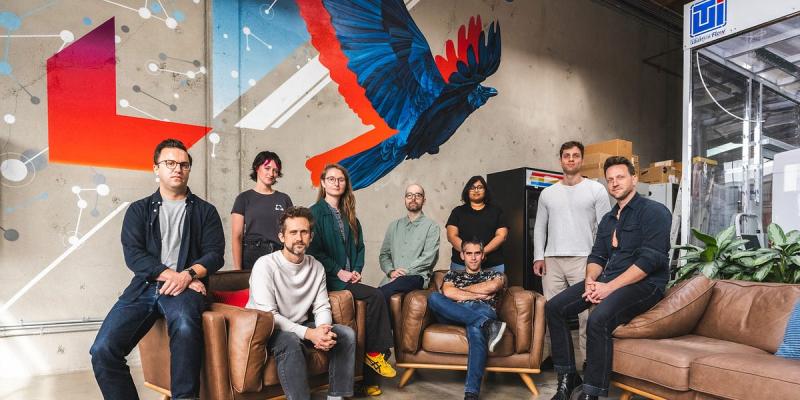
Future House is a non-profit AI research organization based in San Francisco, co-founded in late 2023 by Sam Rodriques and Andrew White with backing from former Google CEO Eric Schmidt. The organization’s ambitious 10-year mission centres on building “AI Scientists”, semi-autonomous systems capable of reasoning through the entire scientific process, from hypothesis generation to experiment design and data analysis. In 2025, Future House launched Edison Scientific, a for-profit spinout that raised $70 million in seed funding to commercialize the technology.
The Future House platform provides specialized Future House AI agents for scientific tasks, including Crow for literature Q&A, Falcon for deep literature synthesis, Owl for prior-work detection, Phoenix for experimental chemistry, and Robin for unified end-to-end discovery. These tools have already demonstrated breakthrough capabilities, including identifying ripasudil as a potential treatment for dry age-related macular degeneration (dAMD) and achieving superhuman performance on scientific benchmarks.
The Founding Team: MIT and Rochester Researchers Unite
Sam Rodriques: CEO, Co-Founder, and TIME100 AI Honoree
Sam Rodriques serves as CEO, co-founder, and director of FutureHouse, bringing exceptional credentials as a physicist and bioengineer. Rodriques completed his PhD at MIT in 2019, working in Professor Ed Boyden’s lab to understand the inner workings of the brain through innovative neurotechnology development. His doctoral research led to inventions in spatial and temporal transcriptomics, brain mapping, gene therapy, and nanofabrication.
Before founding FutureHouse, Rodriques ran an academic laboratory at the Francis Crick Institute, one of Europe’s most prestigious biomedical research centres. His scientific contributions have earned significant recognition, including being named to the 2025 TIME100 AI list, recognising the 100 most influential people in artificial intelligence globally.
The inspiration for FutureHouse emerged during Rodriques’s PhD at MIT. He recalls: “The entire idea behind FutureHouse was inspired by this impression I got during my PhD at MIT that even if we had all the information we needed to know about how the brain works, we wouldn’t know it because nobody has time to read all the literature.” This realisation highlighted a fundamental bottleneck in scientific progress: the sheer volume of knowledge had exceeded human capacity to synthesise and act upon it.
When ChatGPT 3.5 was released in November 2022, Rodriques saw a path toward more powerful models that could generate scientific insights autonomously. His background developing the concept of Focused Research Organisations (FROs) with Adam Marblestone led him to meet Andrew White and Eric Schmidt. Over the course of a year, Rodriques brainstormed with Schmidt and refined the concept into a formal proposal, with relationship building proving crucial for gaining traction with such an ambitious idea.
Rodriques articulates FutureHouse’s vision clearly: “Natural language is the real language of science. Other people are building foundation models for biology, where machine learning models speak the language of DNA or proteins, and that’s powerful. But discoveries aren’t represented in DNA or proteins. The only way we know how to represent discoveries, hypothesise, and reason is with natural language.”
Andrew White: Co-Founder and Chemistry AI Pioneer
Andrew White serves as co-founder, bringing deep expertise in computational chemistry and being among the first researchers to apply large language models to scientific tasks. White is a computational chemist at the University of Rochester who received early access to ChatGPT 4 and built the first large language agent for science.
White’s background in chemistry provides complementary expertise to Rodriques’s neurobiology focus, enabling FutureHouse to address scientific challenges across multiple domains. His pioneering work applying language models to chemical tasks demonstrated the potential for AI to assist with molecular design, reaction prediction, and experimental planning, proving that language models could understand and reason about scientific concepts beyond just text manipulation.
The collaboration between Rodriques and White represents a powerful combination of neuroscience, physics, and chemistry expertise, enabling FutureHouse AI to tackle diverse scientific challenges whilst maintaining deep domain understanding essential for building trustworthy AI scientists.
Key Supporters and Advisers
Eric Schmidt’s involvement extends far beyond financial backing. The former Google CEO, known for his technical acumen and strategic vision, has been “an extraordinary ally” according to Rodriques, providing not just capital but guidance in building FutureHouse into a world-class research organisation capable of achieving its audacious goals.
Additional key figures who helped build FutureHouse include Tom Kalil, Adam Marblestone, and Tony Kulesa, bringing expertise in science policy, focused research organisations, and scientific strategy respectively. This brain trust provides FutureHouse with connections across academia, industry, and government whilst offering strategic guidance on navigating the complex landscape of AI for science.
Revolutionary Technology: Specialized AI Agents for Science
The FutureHouse Platform Architecture
Launched in May 2025, the FutureHouse platform provides a suite of specialized Future House AI agents, each optimised for specific scientific tasks. This modular approach recognises that different stages of the scientific process require different capabilities, with dedicated agents offering superior performance compared to general-purpose AI assistants.
The architecture emphasises transparency and “superhuman” performance on rigorous scientific benchmarks. Every answer provided by FutureHouse AI agents includes a complete “reasoning trace” showing which papers were consulted, what analysis was performed, and how conclusions were reached. This transparency proves essential for building trust with scientists who must verify AI-generated insights before acting upon them.
Crow: Citation-Backed Literature Q&A
Crow serves as a literature question-and-answer agent that provides fast, citation-backed answers to technical questions. Built on the open-source PaperQA2 system, Crow represents what Rodriques calls “the best AI agent in the world for retrieving and summarising information in scientific literature.”
Unlike general AI assistants that may hallucinate citations or provide unreliable answers, Crow grounds every response in actual scientific papers, showing exact passages that support each claim. This citation-backed approach ensures researchers can verify information and trace claims back to primary sources, maintaining scientific rigour whilst dramatically accelerating literature search compared to traditional methods.
Crow excels at answering focused technical questions like “What methods have been used to measure mitochondrial calcium in live cells?” or “What is the binding affinity of ripasudil to ROCK proteins?” The agent searches millions of papers, identifies relevant passages, synthesises information across sources, and provides concise answers with complete citations, accomplishing in seconds what might take researchers hours or days using conventional literature search tools.
Falcon: Deep Literature Synthesis
Whilst Crow handles focused queries, Falcon specialises in deep literature synthesis, scanning hundreds of papers and specialised databases like Open Targets to produce comprehensive reviews. Falcon addresses a critical need in modern science: the systematic review of literature to understand the state of knowledge in a particular area.
Traditional systematic reviews require months of work as researchers manually screen thousands of papers, extract relevant information, and synthesise findings. Falcon automates much of this process, enabling researchers to conduct comprehensive literature reviews in days rather than months, freeing scientists to focus on analysis and interpretation rather than information gathering.
Scientists at research institutions have used Falcon to conduct systematic reviews of genes relevant to Parkinson’s disease, finding that Future House AI agents performed better than general AI agents. This validation from independent researchers provides crucial evidence that FutureHouse’s specialised approach delivers superior results compared to applying general-purpose language models to scientific tasks.
Owl: Prior-Work Detection
Owl, formerly called HasAnyone, serves as a “prior-work” detection agent that checks if specific research ideas have already been explored. This capability addresses a surprisingly common problem in science: researchers spending months pursuing ideas only to discover late in the process that someone else has already investigated the question.
Owl answers queries like “Has anyone measured the effect of X compound on Y cell type?” or “Has anyone investigated the role of Z gene in this disease?” The agent searches scientific literature comprehensively, identifying relevant prior work even when authors used different terminology or approached the question from different angles.
This capability proves particularly valuable during the early stages of research project planning, enabling scientists to quickly assess novelty before committing substantial resources. Owl helps researchers build on existing knowledge rather than redundantly repeating prior work, accelerating scientific progress by ensuring effort focuses on genuinely novel contributions.
Phoenix: Experimental Chemistry Agent
Phoenix represents FutureHouse’s venture into experimental design, specifically for chemistry applications. This agent suggests novel compounds, predicts reaction outcomes, and estimates synthesis costs, assisting chemists in experimental planning and molecular design.
Phoenix leverages Andrew White’s expertise in computational chemistry, applying machine learning to predict how molecules will behave and what reactions might succeed. The agent can suggest alternative synthetic routes when initial plans prove impractical, estimate the difficulty and cost of proposed syntheses, and identify potential issues before researchers commit to expensive experiments.
This predictive capability proves particularly valuable in medicinal chemistry, where drug discovery requires synthesising and testing thousands of compounds. Phoenix helps researchers prioritise which molecules to make based on predicted properties and synthetic accessibility, improving efficiency in early-stage drug discovery.
Finch and Robin: Data Analysis and Integrated Discovery
Finch specialises in data analysis, helping researchers extract insights from complex datasets. Robin represents the most ambitious agent: a unified system that integrates multiple specialised agents to automate end-to-end discovery, from initial question through literature synthesis, data analysis, hypothesis generation, and experimental planning.
In 2025, Robin was used to identify ripasudil as a potential treatment for dry age-related macular degeneration (dAMD), demonstrating the capability for Future House AI to make genuine scientific discoveries. This breakthrough validated FutureHouse’s core thesis that AI systems can contribute meaningfully to scientific progress, not merely assisting human researchers but actively generating novel insights.
The ripasudil discovery emerged from Robin’s ability to synthesise information across literature, identify patterns in existing data, and generate testable hypotheses. This end-to-end capability represents the first steps toward truly autonomous AI scientists capable of conducting research with minimal human guidance.
FutureHouse Funding: From Eric Schmidt to Edison Scientific
Philanthropic Foundation
FutureHouse operates primarily through philanthropic funding from Eric Schmidt, though the organisation has multiple supporters. As a non-profit research entity, FutureHouse can pursue foundational research without the pressure for immediate commercial returns, enabling focus on long-term ambitious goals like building fully autonomous AI scientists.
Schmidt’s involvement reflects his long-standing interest in applying AI to scientific challenges and his conviction that accelerating scientific discovery represents one of the most impactful applications of artificial intelligence. His support enables FutureHouse to recruit world-class talent, invest in ambitious research programmes, and make tools available to researchers worldwide regardless of ability to pay.
Edison Scientific Spinout: $70 Million Seed Round
In November 2025, FutureHouse announced Edison Scientific, a for-profit spinout that raised $70 million in seed funding at a $250 million valuation. The round was co-led by Spark Capital, Triatomic Capital, and a major US biotech investor, with angels including Google Chief Scientist Jeff Dean and CrowdStrike co-founder Dmitri Alperovitch.
The decision to create a commercial spinout arose from overwhelming demand following the May 2025 platform launch. Rodriques noted receiving inbound interest from VP or C-level executives at six of the top 10 pharmaceutical companies, plus numerous smaller biotechs. This commercial interest validated the technology’s value whilst creating a challenge: building products, implementing payment systems, going to market, and supporting customers represented inappropriate uses of philanthropic funding.
The FutureHouse funding strategy separates concerns cleanly. The non-profit FutureHouse continues developing AI scientists for foundational biology research, funded philanthropically. Edison Scientific commercialises the technology, serving pharmaceutical and biotech companies willing to pay for access, with for-profit funding supporting customer-facing operations.
Approximately 30 employees from FutureHouse moved to Edison Scientific to support the transition, whilst FutureHouse maintains its core research team focused on advancing the state of the art in AI for science. This split enables both organisations to pursue their respective missions effectively whilst ensuring foundational research remains freely available to academic researchers.
Kosmos: The Next-Generation AI Scientist
Edison Scientific’s flagship product, Kosmos, represents the most advanced embodiment of FutureHouse’s vision for AI scientists. Kosmos is described as an “AI co-scientist” capable of running hundreds of research tasks in parallel, transforming raw datasets into comprehensive, validated reports that compress months of work into a single run.
The development of Kosmos occupied roughly two years, building on the foundation established by earlier FutureHouse AI agents. Edison Scientific claims Kosmos has produced seven discoveries, four of which were novel. A typical Kosmos run lasts up to 12 hours, searches around 1,500 papers, and writes 42,000 lines of code to analyse data and generate insights.
The most striking claim about Kosmos centres on productivity: Rodriques and co-author Michaela Hinks assert that “a single Kosmos run can accomplish work equivalent to six months of a PhD or postdoctoral scientist.” This estimate derives from feedback during beta testing, when scientists using Kosmos were asked how long similar conclusions would have taken them to reach independently.
The team compared Kosmos output to real research timelines, finding that several reproduced findings had taken human researchers approximately four months to complete. Separate calculations based on the time required to read the same papers and perform equivalent analyses produced similar estimates. Whilst Edison Scientific acknowledges these estimates remain rough, they suggest Kosmos performs work equivalent to several months of human research effort.
Technical Capabilities and Limitations
Kosmos processes pre-prepared datasets provided by researchers, applying its suite of AI agents to literature synthesis, data analysis, hypothesis generation, and insight validation. The system operates autonomously once given a research question and relevant data, requiring no human intervention during the analysis phase.
PhD evaluators assessing Kosmos outputs found 79.4% of claims supported overall, including 85.5% for data claims and 82.1% for literature-based claims. These validation rates demonstrate meaningful capability whilst acknowledging that approximately 20% of claims may be flawed or require additional verification.
Critics have questioned whether certain discoveries claimed as novel actually represent genuine innovations or rediscoveries of existing knowledge. The SOD2 finding, for instance, faced scrutiny regarding its novelty. Rodriques has responded openly to such concerns, acknowledging that Kosmos should collaborate with human scientists who provide essential oversight and that some findings may prove flawed upon further investigation.
Experts including Ben Glocker at Imperial College London and Noah Giansiracusa at Bentley University have urged careful human oversight despite Kosmos’s impressive capabilities. The consensus emerging among scientists familiar with the technology suggests Kosmos can meaningfully accelerate research, with Edison Scientific estimating 20 Kosmos cycles equal approximately six months of human work, but that human judgement remains essential for evaluating outputs and directing research strategy.
Benchmarking and Open Science Commitment
LAB-Bench: Open-Source Evaluation Suite
FutureHouse emphasises transparency and rigorous evaluation through LAB-Bench, an open-source evaluation suite available on GitHub used to measure AI capabilities in biological research. LAB-Bench provides standardised tasks spanning literature search, data analysis, experimental design, and scientific reasoning, enabling objective comparison of different AI systems’ performance on scientific tasks.
The development of LAB-Bench reflects FutureHouse’s commitment to advancing the field broadly, not just promoting its own technology. By creating and sharing evaluation tools, FutureHouse enables other researchers to assess AI capabilities rigorously and track progress toward increasingly capable AI scientists.
Aviary: Tool Access for Language Models
FutureHouse recently released Aviary, an environment giving language models access to the same scientific tools as human researchers. The architecture implements what FutureHouse calls the “language decision process” (LDP), where the language model and the environment interact to enact scientific workflows.
Aviary enabled open-source language models with modest compute budgets to surpass human performance on two LAB-Bench tasks: scientific literature search and reasoning about DNA constructs. This achievement demonstrates that specialised tooling and task-specific training can enable smaller models to outperform larger general-purpose models on scientific tasks, suggesting a path toward more efficient and accessible AI for science.
The system implements five distinct Aviary environments, each providing tools relevant to specific scientific domains. By giving Future House AI agents access to databases, analysis software, simulation tools, and other resources scientists use daily, Aviary bridges the gap between language understanding and practical scientific work.
Humanity’s Last Exam
FutureHouse contributed to refining “Humanity’s Last Exam”, a deliberately difficult AI benchmark designed to ensure rigorous scientific evaluation. The benchmark tests capabilities across multiple scientific domains with questions requiring genuine understanding rather than pattern matching or memorisation.
The name “Humanity’s Last Exam” reflects the aspiration to create evaluation tasks that remain challenging even as AI capabilities advance rapidly. By participating in benchmark development, FutureHouse helps establish standards for measuring progress toward truly capable AI scientists whilst ensuring evaluation methods don’t become obsolete as technology improves.
Applications and Impact
Pharmaceutical and Biotech Industry
The pharmaceutical industry represents the most immediate commercial opportunity for FutureHouse AI and Edison Scientific. Drug discovery and development typically requires 10+ years and costs exceeding $2 billion per approved drug, with most candidates failing in clinical trials. Future House AI agents can accelerate multiple stages of this process:
Target Identification: Analysing genetic data, disease pathways, and existing literature to identify promising therapeutic targets.
Lead Discovery: Suggesting novel compounds with desired properties and predicting their behaviour.
Literature Intelligence: Ensuring researchers stay current with rapidly evolving knowledge and avoiding redundant experiments.
Data Analysis: Extracting insights from high-throughput screening, clinical trials, and other data-intensive activities.
The inbound interest from major pharmaceutical companies validates that industry leaders recognise Future House AI’s potential to meaningfully accelerate drug development whilst reducing costs.
Academic Research
Despite the commercial spinout, FutureHouse maintains commitment to providing tools to academic researchers. A free tier of services is intended to remain available, ensuring that scientists at universities and research institutions worldwide can access Future House AI capabilities regardless of funding constraints.
This accessibility proves critical for achieving FutureHouse’s mission of accelerating scientific discovery broadly. Academic researchers often pioneer new fields and ask the most fundamental questions, making them essential users whose work generates the discoveries that eventually translate into commercial applications.
Scientists have used Future House AI agents to conduct systematic reviews, analyse complex datasets, identify research gaps, and generate hypotheses across diverse fields from neuroscience to chemistry to genetics. These applications demonstrate the breadth of scientific problems where AI assistance proves valuable.
Addressing Scientific Productivity Decline
Multiple researchers examining scientific progress over the past 50 years have reached a troubling conclusion: scientific productivity is declining. Whilst research investment continues growing, the rate of breakthrough discoveries appears to be slowing. This productivity crisis motivates FutureHouse’s mission.
If Future House AI can help scientists work more efficiently, identify promising research directions more quickly, and avoid redundant efforts, it could reverse this troubling trend. The ability to synthesise knowledge across enormous literature, analyse data at scale, and test hypotheses systematically addresses several bottlenecks limiting scientific productivity.
Frequently Asked Questions About FutureHouse
What is FutureHouse’s mission?
FutureHouse’s 10-year mission is to build semi-autonomous AI scientists capable of automating the entire scientific research process, from hypothesis generation through experiment design to data analysis and discovery. The organisation aims to accelerate scientific discovery and provide worldwide access to cutting-edge scientific, medical, and engineering expertise through Future House AI agents.
Who founded FutureHouse and when?
Sam Rodriques and Andrew White co-founded FutureHouse in November 2023. Rodriques completed his PhD at MIT in 2019 and previously ran a laboratory at the Francis Crick Institute. White is a computational chemist at the University of Rochester who built the first large language agent for science. The organisation is backed by former Google CEO Eric Schmidt.
What is Edison Scientific and how does it relate to FutureHouse?
Edison Scientific is a for-profit commercial spinout launched in November 2025 to commercialise FutureHouse’s technology for pharmaceutical and biotech companies. Edison raised $70 million in seed funding at a $250 million valuation. FutureHouse continues as a non-profit focused on foundational research, whilst Edison Scientific handles commercial deployment, customer support, and enterprise features.
What are the main FutureHouse AI agents?
The primary Future House AI agents include Crow (literature Q&A with citations), Falcon (deep literature synthesis), Owl (prior-work detection), Phoenix (experimental chemistry), Finch (data analysis), and Robin (integrated end-to-end discovery). Edison Scientific’s Kosmos represents the most advanced system, capable of conducting comprehensive research autonomously.
How much funding has FutureHouse received?
FutureHouse operates primarily on philanthropic funding from Eric Schmidt and other supporters, though specific amounts haven’t been publicly disclosed. The commercial spinout Edison Scientific raised $70 million in seed funding in December 2025 at a $250 million valuation, co-led by Spark Capital, Triatomic Capital, and a major US biotech investor.
Can academic researchers access FutureHouse AI tools?
Yes, FutureHouse intends to maintain a free tier of services for academic researchers despite the commercial spinout. The organisation’s mission includes providing worldwide access to scientific AI capabilities, recognising that academic research often pioneers new fields and asks fundamental questions essential for long-term scientific progress.
The Road Ahead: Challenges and Opportunities
FutureHouse faces significant challenges in its mission to build fully autonomous AI scientists. Current models operate at what Rodriques describes as “B-level intelligence”, far from matching the capabilities of graduate students, especially in biology where complexity proves immense. Substantial advances in model capabilities, training methods, and tool integration will be required to achieve the 10-year vision.
The experimental bottleneck represents a major challenge: the lack of virtual cells or virtual humans forces reliance on real biology and model organisms, limiting the speed at which hypotheses can be tested. AI scientist agents aim to tackle this by optimising experimental efficiency, identifying the best cell lines or models for given scenarios, and creating experimental plans that minimise risk, but fundamental limitations in simulation capabilities constrain progress.
Looking forward, Rodriques envisions a future where AI generates hypotheses and designs experiments based on data analysis whilst human scientists shift to more strategic oversight roles, evaluating proposals, allocating resources, and guiding research direction. This division of labour leverages AI’s ability to process vast information with human judgement and expertise to accelerate scientific discovery.
FutureHouse is working to embed agents with tacit knowledge enabling more sophisticated analyses whilst giving agents ability to verify reproducibility of results using raw data from research papers. In the longer run, increasingly capable Future House AI scientists could tackle humanity’s most pressing challenges in health, sustainability, and fundamental science, fulfilling the organisation’s mission to democratise access to world-class scientific expertise.
As Future House AI agents continue advancing, the boundary between AI assistance and AI autonomy will blur. The coming years will determine whether FutureHouse achieves its audacious vision of building AI scientists capable of driving scientific discovery with minimal human guidance, or whether the challenges prove more formidable than anticipated. Regardless of the ultimate outcome, FutureHouse’s work is already demonstrating that AI can meaningfully accelerate scientific progress, offering hope for breakthroughs that could transform medicine, sustainability, and human knowledge.
Also Read: Myriad Wind Energy Systems: Revolutionising Distributed Wind with Modular Multi-Rotor Technology