

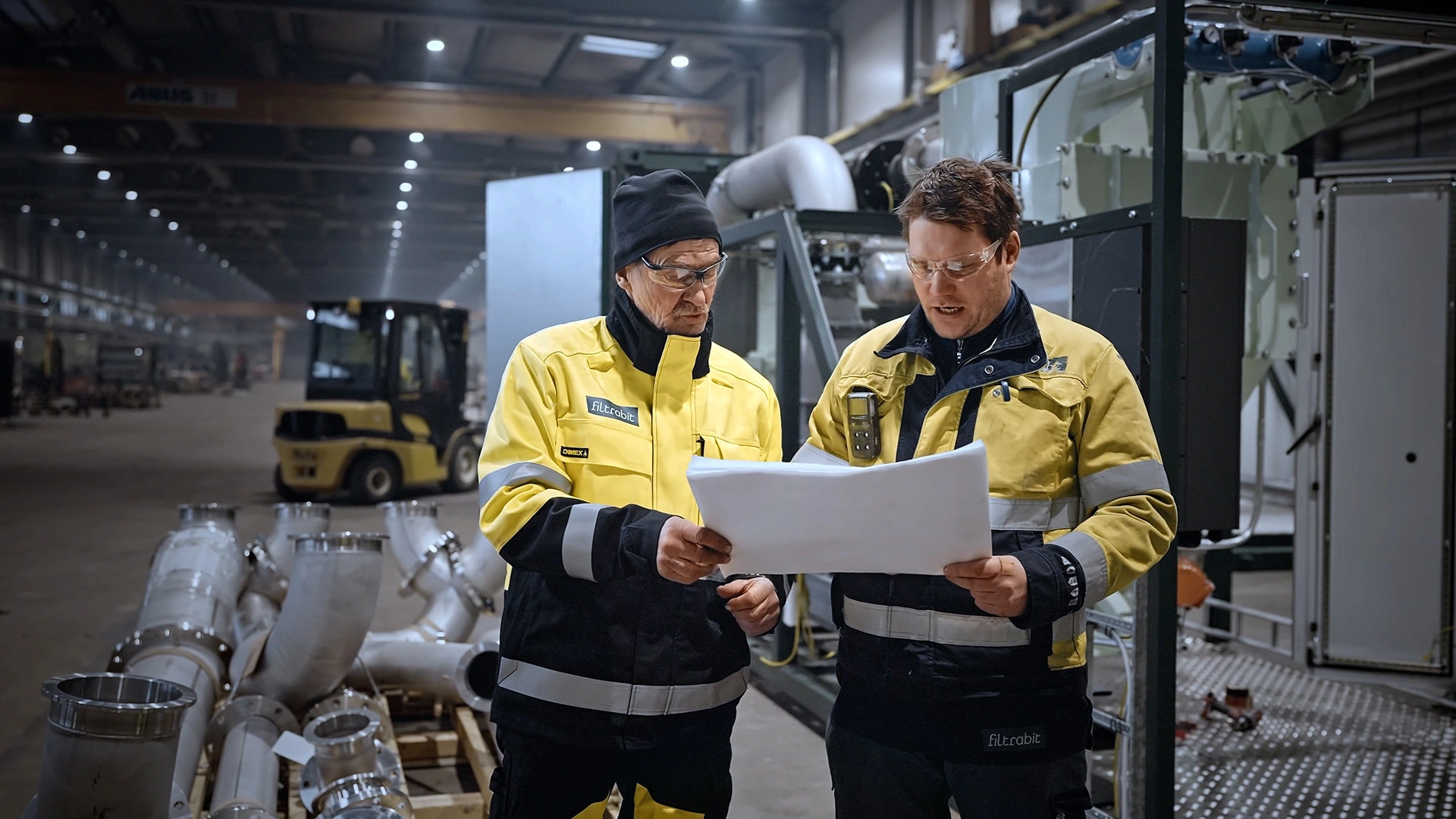
Filtrabit is an Oulu-based Finnish cleantech company that specialises in modular, industrial-scale dust extraction systems for heavy industry. Founded in 2011, the company has developed patented flow-dynamic separation technology that addresses one of manufacturing’s most persistent challenges: capturing and recycling industrial dust whilst maintaining continuous operations.
In late 2025, the company secured a €2 million funding commitment from Ajanta Innovations 2 Ky to accelerate global expansion into India, Central Europe, and the Nordic regions. This latest investment builds on an impressive year that saw Filtrabit raise €2 million in May, receive a €600,000 Business Finland grant in June, and secure €4 million in lease financing from the Finnish Climate Fund plus a €5 million loan from Norion Bank in 2024.
Led by CEO Dr Kim Fagerlund, formerly Vice President of Technology at Metso, the company serves major industrial clients including SSAB’s steel mill in Raahe and Outokumpu in Tornio, Finland. The technology promises to transform how heavy industries manage particulate pollution whilst recovering valuable materials for reuse.
Leadership: Dr Kim Fagerlund’s Industry Experience
Dr Kim Fagerlund joined as CEO in April 2024, bringing 25 years of experience in the metals and minerals industry. His background spans technical, commercial, and leadership roles at industry leaders including Outokumpu, Outotec, and Metso, providing deep understanding of customer requirements, industry dynamics, and global markets.
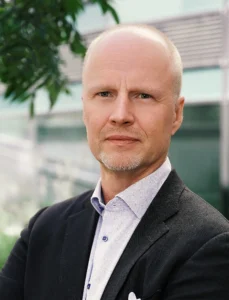
Fagerlund holds a doctorate in material science and metallurgy, combining scientific credibility with commercial expertise. His most recent role as Vice President of Technology at Metso positioned him at the intersection of technology development and customer applications, ideal preparation for leading a company commercialising innovative cleantech solutions.
In discussing his first year as CEO, Fagerlund has emphasised the updated strategy focusing on selected market regions where the technology addresses urgent needs and where the company can establish strong market positions. This disciplined geographic focus contrasts with attempts to serve all markets simultaneously, concentrating resources where they can achieve greatest impact.
Filtrabit Funding Journey and Financial Strategy
The company’s financial trajectory demonstrates growing investor and institutional confidence in both the technology and the market opportunity.
Early Development and Grants
Established in 2011, the company spent its first years developing the core technology through academic collaboration and early prototypes. Professor Pekka Mäntylä, who participated in the foundational research, became a shareholder, aligning academic expertise with commercial success.
The 2017 Horizon 2020 grant of €1.6 million provided crucial validation and resources during the technology maturation phase. This non-dilutive funding enabled extensive testing and refinement without equity dilution, positioning the company to attract private investment once commercial viability was demonstrated.
2024: Building Financial Infrastructure
In 2024, the company secured significant funding to support manufacturing scale-up and customer deployments. The Finnish Climate Fund provided a €4 million capital loan specifically supporting the company’s role in reducing industrial emissions and enabling circular economy practices through material recovery.
Norion Bank, a prominent Nordic financing group, extended a €5 million loan in September 2024. This debt financing provided working capital for operations, manufacturing capacity expansion, and customer financing arrangements without further equity dilution.
These substantial debt facilities reflected growing confidence from financial institutions in the company’s business model and technology validation. Banks typically avoid lending to early-stage cleantech companies due to technology risk and uncertain cash flows. The willingness of established financial institutions to provide significant debt capital demonstrated that the technology had moved beyond proof-of-concept to proven commercial applications generating revenue.
2025: Accelerating Growth
May 2025 brought €2 million in equity financing supporting continued growth. Just one month later, Business Finland awarded a €600,000 grant for product development, funding a new development project with an estimated total investment of €1.2 million. This grant supports ongoing innovation ensuring the technology maintains competitive advantages whilst addressing emerging customer requirements.
The latest Filtrabit funding round announced in late 2025 secured an additional €2 million commitment from Ajanta Innovations 2 Ky. This investment specifically targets international expansion, enabling the company to establish presence in key markets outside Finland.
Ajanta Innovations, an investment firm focused on green economy companies, brings not just capital but strategic expertise in scaling cleantech businesses and connections across target markets. The partnership positions the company to accelerate market entry whilst benefiting from Ajanta’s experience navigating regulatory environments and customer relationships in new geographies.
Strategic Expansion: From Finland to Global Markets
Proven Finnish Success
The company’s technology has been validated through successful deployments at Finland’s most demanding industrial sites. SSAB’s steel mill in Raahe operates one of the flow-dynamic filters, with recent agreements to add additional modular units expanding capacity. Steel production generates enormous dust volumes at high temperatures, representing one of the most challenging dust control applications. Success in this environment demonstrates the technology’s robustness and reliability.
Outokumpu’s facility in Tornio provides another high-profile reference installation. Outokumpu is one of the world’s leading stainless steel manufacturers, and its willingness to deploy the technology speaks volumes about performance and reliability. These blue-chip customers provide crucial validation when approaching potential clients in new markets who naturally want proof that technology works in real-world industrial conditions.
India: Massive Market Opportunity
The company recently established strategic cooperation with FAFECO, a leading overhead crane manufacturer and material handling solutions provider in India. This partnership creates a pathway into India’s enormous heavy industry market, providing local presence, customer relationships, and understanding of regulatory and business environments.
India represents one of the world’s fastest-growing industrial economies, with massive steel, cement, and mining sectors. Environmental regulations are tightening as air quality concerns mount in industrial cities. Indian manufacturers face increasing pressure to reduce emissions whilst simultaneously seeking opportunities to recover materials and reduce raw material costs.
The partnership with FAFECO includes a rental agreement, enabling Indian customers to access the technology through the operating lease model. This approach proves particularly attractive in markets where capital constraints might otherwise prevent adoption of advanced environmental technologies.
Central Europe and Nordics
Central European heavy industries face some of the world’s strictest environmental regulations whilst competing globally on cost. The combination of regulatory pressure and economic incentives for material recovery creates ideal conditions for technology adoption.
The Nordic region beyond Finland offers natural expansion opportunities. Sweden, Norway, and Denmark have substantial manufacturing sectors, cultural and business similarities to Finland, and strong environmental commitments creating customer receptivity to advanced cleantech solutions.
The Operating Lease Model: Eliminating Capital Barriers
One of the company’s most innovative business model elements is the operating lease offering. Rather than requiring customers to purchase systems outright, the company offers dust extraction as a service, with clients paying regular lease fees rather than making large upfront capital expenditures.
This approach addresses a critical barrier to cleantech adoption. Even when technologies offer clear return on investment through operating cost savings, manufacturers often struggle to justify capital expenditure, particularly for environmental equipment that doesn’t directly increase production capacity or reduce labour costs.
Operating leases shift the economic equation. Instead of a capital expenditure requiring board approval and competing with investments in production equipment, dust control becomes an operating expense with immediate benefits and no balance sheet impact. The monthly lease payments can often be justified by material recovery value alone, making the decision financially straightforward.
For the company, the lease model creates recurring revenue streams and ongoing customer relationships extending far beyond one-time equipment sales. These relationships enable the company to provide maintenance, monitoring, and optimisation services whilst maintaining detailed performance data supporting continuous improvement.
The model also aligns incentives perfectly. When the company owns the equipment and charges based on performance or uptime, it has every incentive to ensure reliability and efficiency. This contrasts with traditional equipment sales where manufacturers have limited stake in long-term performance after installation.
Material Recovery: The Circular Economy Advantage
Beyond emission reduction, the technology enables valuable material recovery that often provides the economic justification for system deployment. Industrial dust isn’t waste; it’s raw material in the wrong place. Steel mill dust contains iron and valuable alloying elements. Foundry dust includes valuable metals. Mining dust represents mineral concentrate.
Traditional bag filters often contaminate recovered material with textile fibres from degraded bags, reducing its value or making recycling impossible. The absence of filter media means recovered material is pure and can be immediately recycled back into production processes.
Major industrial customers report that material recovery value alone often covers or exceeds lease payments, making the dust control system cash-flow positive from day one whilst simultaneously meeting environmental requirements. This economic reality transforms the sales conversation from environmental compliance cost to profit centre, dramatically accelerating adoption.
The circular economy benefits extend beyond individual facilities. By recovering and recycling materials that would otherwise be lost, the technology reduces demand for virgin raw materials, cutting the environmental footprint of entire supply chains. This aligns perfectly with European Union circular economy objectives and can help customers meet sustainability commitments to their own customers.
Frequently Asked Questions About Filtrabit
How does flow-dynamic dust separation work?
Flow-dynamic separation uses computational fluid dynamics principles to engineer airflow patterns that separate particles from air without filter media. Contaminated air is accelerated through precisely designed channels where particles separate based on mass and velocity, concentrating into a stream that’s continuously discharged whilst clean air exits separately. This eliminates filter bags and enables continuous operation without clogging.
What industries can benefit from this technology?
The technology serves heavy industries including steel mills, foundries, quarries, mining operations, ore processing facilities, cement production, and other manufacturing generating substantial dust. Any industry struggling with dust control costs, regulatory compliance, or seeking to recover valuable materials from dust streams can benefit from the modular systems.
How much does a system cost?
Whilst specific pricing isn’t publicly disclosed, the company offers operating lease models eliminating large upfront capital expenditures. Lease payments are structured so material recovery value often covers costs, making systems cash-flow positive from day one. For customers preferring purchase, modular pricing enables capacity to be tailored to budgets whilst systems can be expanded as requirements grow.
Where is the company based and who leads it?
The company is headquartered in Oulu, Finland, and led by CEO Dr Kim Fagerlund, who joined in April 2024 from Metso where he served as Vice President of Technology in Metals and Minerals. The leadership team brings extensive industry experience from companies including Outokumpu, Outotec, and TietoEvry.
What funding has the company raised?
In 2024-2025, the company raised substantial capital including €2 million equity in May 2025, €2 million commitment from Ajanta Innovations in late 2025, €600,000 Business Finland grant in June 2025, €4 million lease financing from Finnish Climate Fund in 2024, and €5 million loan from Norion Bank in 2024. Earlier funding included the prestigious €1.6 million EU Horizon 2020 grant in 2017.
Can existing facilities be retrofitted?
Yes, the modular containerised design specifically enables retrofitting existing facilities without major construction or building permits. Installation can be completed in a single day when necessary ducting is in place, making it practical to add capacity during planned maintenance windows without extended production interruptions.
Also Read: GameByte Raises $1M to Simplify AI-Powered Game Creation