

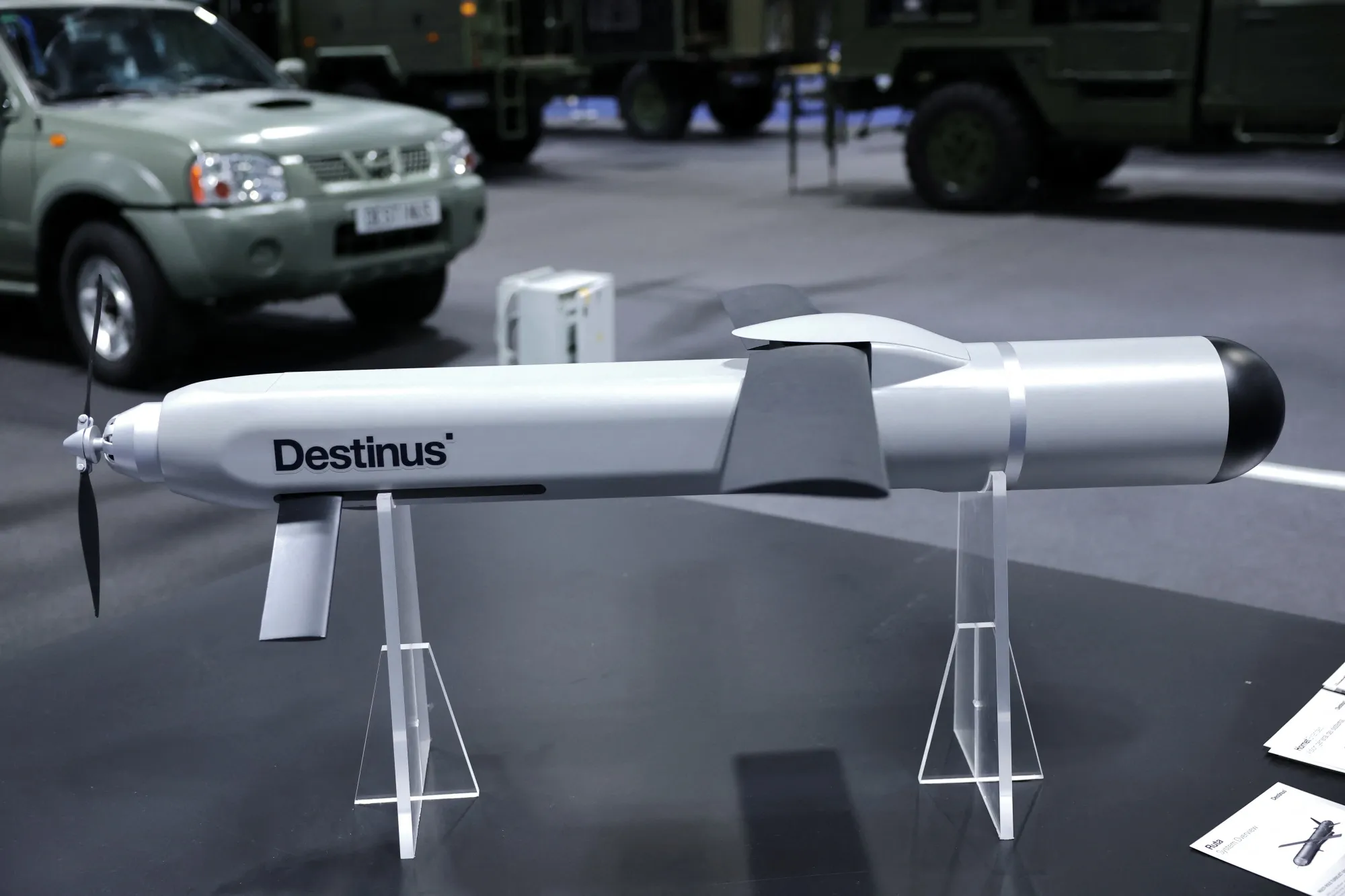
Destinus drones sit at the centre of Europe’s growing push to build sovereign aerospace and defence capabilities. Founded in 2021, Destinus is a European aerospace and defence company best known for its autonomous flight systems, including jet powered and propeller driven unmanned aerial vehicles, alongside longer term ambitions in hydrogen powered supersonic and hypersonic flight.
Originally recognised for its bold vision of hydrogen fuelled aircraft capable of flying at Mach 5 and beyond, Destinus has since sharpened its focus on near term, deployable autonomous systems. That shift has helped position the company as a serious industrial player in Europe’s defence and security ecosystem.
Destinus funding update: €50m facility accelerates production
In a major milestone for the business, Destinus has secured a €50 million financing facility from Commerzbank. This marks the company’s first commercial bank facility and supports the next phase of large scale autonomous flight production across Europe.
The new facility complements €140 million in recently completed convertible instruments and shareholder loans. When combined with more than €200 million in earlier equity financing, Destinus has now raised close to €400 million in total funding to date.
This latest financing is not about speculative research. It is aimed squarely at industrialisation. The capital will be used to expand production lines, integration facilities and testing infrastructure, allowing Destinus to manufacture autonomous systems at scale for European and allied customers.
Also read: Exein Secures €100m to Scale Embedded IoT Cybersecurity
Destinus Netherlands and Europe’s defence industrial base
Although Destinus operates across multiple European countries, its presence in the Netherlands is increasingly important. The company is strengthening its role within the Dutch and wider European defence industrial base, contributing to efforts to reduce reliance on non European suppliers for critical defence technologies.
With around 750 engineers and specialists across Europe, Destinus combines AI driven engineering, vertical integration and in house manufacturing. This approach allows faster iteration, tighter security controls and greater resilience in supply chains, all of which are becoming essential in today’s geopolitical climate.
Destinus CEO and leadership direction
Destinus is led by founder and CEO Mikhail Kokorich, who has guided the company through a significant strategic evolution. While early attention focused on hypersonic passenger concepts, leadership has deliberately refocused resources on autonomous and uncrewed systems where demand is immediate and procurement cycles are clearer.
Commenting on the new funding facility, Kokorich said the financing is a strong signal of confidence in Europe’s ability to build high performance autonomous flight systems at scale. The emphasis now is on execution, manufacturing capacity and delivering operational systems rather than distant concept aircraft.
Destinus drone platforms in production
Destinus drones cover a range of mission profiles, from long range surveillance to high speed strike and aerial defence. The company’s current portfolio includes several distinct platforms.
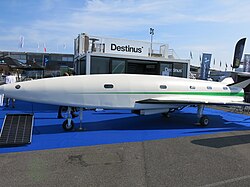
Destinus LORD
The LORD platform is a low cost, long range, multi mission unmanned propeller aircraft. It is designed for rapid mass production using largely off the shelf components. Typical use cases include intelligence, surveillance and reconnaissance, emergency cargo delivery and loitering munition style missions.
Its simplicity and cost efficiency make it suitable for large scale deployment, particularly in scenarios where quantity and endurance matter as much as sophistication.
Destinus RUTA
RUTA is a modular recoverable unmanned turbojet aircraft in the 300 kilogram MTOM class. It balances speed, payload capacity and cost, making it suitable for strike missions, ISR tasks and target training.
Launch is booster assisted, while recovery is achieved using parachutes and airbags. This allows reuse without the need for traditional runways, which is valuable in contested or remote environments.
Destinus Hornet
The Hornet platform is designed for mission flexibility. It supports surveillance, situational awareness, high resolution mapping and data relay roles. Importantly, it can also intercept kamikaze or trespassing drones.
Future versions are being developed with higher levels of autonomy, including the ability to make firing decisions in aerial combat scenarios. This places Hornet at the intersection of AI, autonomy and air defence.
Destinus G concept
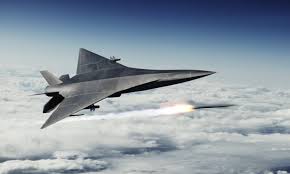
Destinus G represents a concept for an unmanned fighter aircraft optimised for aerial combat. While still conceptual, it reflects the company’s long term ambition to push autonomy into roles traditionally reserved for crewed fighters.
Hypersonic and hydrogen powered ambitions
Alongside its operational drone platforms, Destinus continues to invest in high speed, hydrogen powered flight technology. One of the most notable projects is Destinus 3, a ten metre, two tonne prototype designed to become the world’s first liquid hydrogen powered supersonic unmanned vehicle.
The target is to reach speeds of around Mach 1.3 in test flights, providing critical data on propulsion, thermal management and materials. In the longer term, Destinus envisions large hydrogen powered aircraft capable of transcontinental travel at speeds of up to Mach 6, dramatically reducing journey times.
While these ambitions remain long term, the technology developed feeds back into the company’s expertise in propulsion, aerodynamics and advanced materials.
Strategic shift towards autonomy and AI
A key moment in Destinus’ evolution came with its acquisition of Swiss AI avionics specialist Daedalean in 2025. The deal, reported at over $200 million, signalled a clear pivot towards AI driven autonomy as the company’s core differentiator.
Rather than competing purely on speed, Destinus is building deep capability in autonomous decision making, flight safety and mission management. These capabilities are increasingly critical in defence, security and dual use markets.
What the €50m facility means for Destinus drones
The Commerzbank facility enables Destinus to move from advanced prototypes to industrial scale production. This includes expanding manufacturing capacity, integrating AI avionics, and increasing testing throughput.
For European defence planners, this matters. Autonomous systems that can be produced quickly, in volume and within Europe are becoming a strategic priority. Destinus is positioning itself as a supplier that can meet that demand.
The bigger picture
Destinus drones reflect a broader shift in European aerospace. The focus is moving away from single, flagship programmes towards flexible, autonomous systems that can be adapted quickly and produced at scale.
With nearly €400 million raised, a growing industrial footprint in Europe including the Netherlands, and a clear leadership focus under its CEO, Destinus is no longer just a hypersonic vision story. It is becoming a core player in Europe’s autonomous flight and defence technology landscape.
As production ramps up and deployments increase, Destinus drones are likely to play a visible role in shaping how Europe approaches air power, autonomy and sovereign industrial capability in the years ahead.
We cover European technology and deep tech funding with a clear focus on verified reporting, original analysis, and key developments across the EU startup ecosystem. Follow us on LinkedIn and X for ongoing updates.