

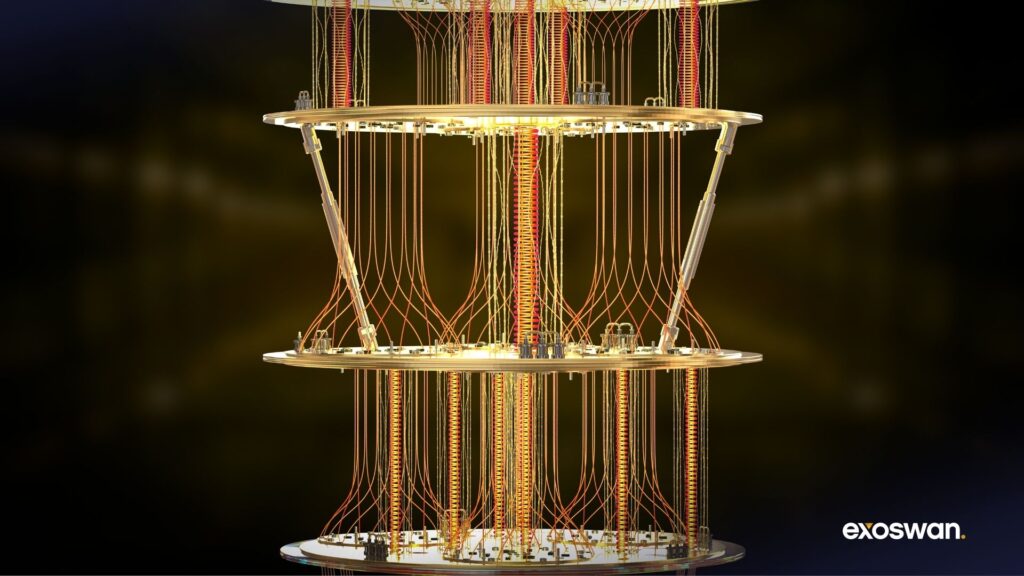
IQM Quantum Computers has quietly become one of Europe’s most promising technology firms, standing out as a genuine leader in the competitive world of quantum computing. The Finnish-German company, founded in 2018 as a spin-off from prestigious institutions like Aalto University and VTT Technical Research Centre of Finland, has grown into what many consider a unicorn in the tech space, reaching a valuation exceeding $1 billion by late 2025. What makes IQM Quantum Computers particularly interesting isn’t just its impressive valuation, but how it’s building practical quantum systems that organisations can actually use today.
What Makes IQM Quantum Computers Different
IQM Quantum Computers operates differently from many of its competitors. Rather than focusing solely on theoretical breakthroughs, the company has taken a pragmatic approach by developing full-stack, superconducting quantum computers that bridge the gap between research and real-world application. This “co-design” philosophy means their hardware gets optimised for specific industrial problems, not just abstract capability. It’s a refreshing contrast to some companies that chase headlines with qubit counts whilst paying less attention to actual utility.
The company’s strength lies in what they call a full-stack approach. This means IQM Quantum Computers doesn’t just produce quantum processors. They provide the complete ecosystem, including software, control systems, and cloud infrastructure. This comprehensive offering appeals to research institutions, supercomputing centres, and industrial enterprises looking for quantum solutions they can trust and implement without building everything from scratch.
Leadership of IQM Quantum Computers
IQM is led by a team of physicists, engineers, and entrepreneurs who understand both quantum science and commercial realities. The company’s leadership combines academic rigour with business acumen, which explains why IQM has managed to balance research ambitions with practical product development.
Dr Jan Goetz serves as Chief Executive Officer and co-founder of IQM Quantum Computers. His vision for the company centres on making quantum computers accessible and useful for real-world problems rather than keeping them confined to research laboratories. Goetz’s background includes deep expertise in quantum physics and business development, positioning him well to navigate the technical challenges and commercial opportunities in the quantum space.
The leadership team includes several other co-founders and key executives who bring specialised knowledge. The company benefits from input by people with backgrounds at major research institutions, bringing credibility and technical depth that resonates with academic and industrial customers alike. This founding team established IQM’s reputation early on, which has proven crucial for attracting funding and building trust with major organisations.
What distinguishes IQM’s leadership approach is their focus on pragmatism over hype. In an industry where some companies make audacious claims about future capabilities, IQM’s leaders have consistently prioritised delivering working systems that customers can actually use. This philosophy has become embedded in company culture and decision-making at all levels. Rather than chasing publicity, the leadership team has focused on building relationships with research institutions, supercomputing centres, and industrial partners who need quantum computing solutions today.
The executive team also emphasises diversity of thought and backgrounds. IQM Quantum Computers draws talent from across Europe and internationally, creating an environment where different perspectives on quantum computing challenges get explored. This diversity has contributed to the company’s pragmatic approach and willingness to listen to customer needs rather than imposing a singular vision.
Board representation and advisory roles include figures with significant experience in quantum science, industrial applications, and venture capital. These external voices help keep the company grounded and connected to broader industry trends. The board structure reflects the investment community’s confidence that IQM Quantum Computers is being steered with both ambition and responsibility.
Recent Milestones and Growth
IQM reached several important milestones during 2025 that underscore its momentum and market confidence.
In September 2025, the company secured over £300 million in Series B funding. This wasn’t just significant for IQM Quantum Computers. It represented the largest quantum sector funding round outside the United States, signalling that serious investment money views Europe’s quantum industry as genuinely competitive. This capital infusion gives IQM substantial runway to scale manufacturing, expand their team, and accelerate product development.
Hardware expansion is progressing ahead of schedule. VTT selected IQM Quantum Computers to deliver a 300-qubit system by late 2027, with a 150-qubit intermediate system due mid-2026. These aren’t theoretical milestones. They represent real customer commitments that require IQM to deliver reliable, scaling quantum hardware on concrete timelines.
The company has also expanded internationally with notable success. Distribution agreements in Japan and Taiwan open Asian markets, where quantum computing interest is rapidly growing. A collaboration with NVIDIA on NVQLink demonstrates how IQM Quantum Computers is thinking about quantum-classical integration and scalable error correction methods that could become industry standards.
Perhaps most impressively, one of IQM’s quantum computers achieved continuous operation for over 100 days without human intervention at a customer site in March 2025. This reliability milestone shows the hardware works in real conditions, not just laboratory environments. That kind of stability is what actually matters to organisations considering quantum investments.
IQM Quantum Computers Stock and Investment
The tech giant remains a private company as of late 2025, despite its unicorn status. The question of when IQM Quantum Computers might pursue an IPO remains open. Given their funding success and recent milestones, a public offering could happen, but the company appears focused on product development and market position rather than rushing to public markets.
IQM Quantum Computers funding demonstrates strong investor confidence. Beyond the £300 million Series B round, the company has attracted backing from notable investors including European venture capital firms, strategic technology partners, and government backing. This diverse funding base suggests investors see genuine long-term potential in IQM’s technology and market position, not just betting on quantum hype.
The Technology Behind the Hardware
IQM builds superconducting quantum computers, the same technology used by larger American companies. However, IQM’s approach differs in several ways. Their systems use a co-design methodology where they optimise hardware for specific use cases rather than building general-purpose machines. This makes their systems more practical and efficient for real-world problems.
The company operates major production facilities in Espoo, Finland, and is constructing an industrial-scale manufacturing site in Grenoble, France. These facilities represent a significant capital commitment, signalling that IQM Quantum Computers is serious about scaling production. European manufacturing strengthens supply chain security for customers concerned about geopolitics and dependency on American suppliers.
Also Read: Pasqal: France’s Quantum Computing Leader Driving Europe’s Deep Tech Ambitions
Long-Term Vision and Roadmap
IQM has articulated an ambitious but realistic roadmap. The ultimate target involves reaching 1 million qubits by 2033. This might sound fantastical, but the pathway is grounded in current physics and engineering. The immediate goal involves developing fault-tolerant quantum systems that can perform useful computations reliably over extended periods. Once that foundation exists, scaling qubit counts becomes an engineering challenge rather than a theoretical problem.
What About Quantum Computing’s Practical Impact
IQM Quantum Computers exists in a quantum ecosystem that’s becoming increasingly practical. Early applications are already emerging. Pharmaceutical companies use quantum simulations to understand molecular behaviour. Financial firms explore portfolio optimisation. Logistics companies work on supply chain problems. Materials scientists investigate new compounds. These aren’t future applications. They’re happening now with systems similar to what IQM produces.
The advantage of IQM Quantum Computers’ full-stack approach is that organisations don’t need quantum specialists on staff to benefit. The software and tools handle much of the complexity, making quantum computing more accessible to traditional enterprises.
IQM Quantum Computers in the Broader Landscape
European quantum computing faces stiff competition from well-funded American companies and growing Chinese efforts. IQM Quantum Computers distinguishes itself through reliability, pragmatism, and integration. Where some competitors make bold claims about future capabilities, IQM Quantum Computers focuses on delivering working systems that solve problems today. That’s not as headline-grabbing, but it’s how successful technology companies actually build sustainable businesses.
The company’s position as a European leader matters politically and economically. Governments across Europe view quantum computing as strategically important for digital sovereignty and technological independence. IQM Quantum Computers has positioned itself as the dependable European option, which brings both government support and customer confidence.
Final Thoughts on IQM Quantum Computers
IQM Quantum Computers represents what mature quantum computing might look like: practical hardware, diverse product lines, strong financial backing, and a clear path to increasingly sophisticated systems. The company isn’t chasing headlines or making promises about solving everything tomorrow. Instead, IQM Quantum Computers is methodically building quantum computers that work, that customers actually use, and that get better each year.
Whether IQM Quantum Computers becomes a household name or remains a respected B2B technology provider, its impact on quantum computing development seems assured. The company has proven quantum computers can be reliable, practical, and commercially viable. For an industry still finding its feet, that’s genuinely important progress.
Frequently Asked Questions
What is IQM Quantum Computers? IQM Quantum Computers is a Finnish-German quantum computing company founded in 2018 that builds full-stack superconducting quantum computers for research, supercomputing centres, and industrial applications.
How many qubits does IQM Quantum Computers offer? IQM offers systems ranging from 5 qubits (Spark) to 150 qubits (Radiance), with a 300-qubit system in development. The company is roadmapping much larger systems as technology advances.
Is IQM Quantum Computers public or private? As of late 2025, IQM Quantum Computers remains private despite reaching unicorn status with valuations exceeding £1 billion.
What was IQM Quantum Computers’ latest funding round? In September 2025, IQM Quantum Computers secured over £300 million in Series B funding, the largest quantum sector funding round outside the United States.
Where can I access IQM Quantum Computers systems? Through IQM Resonance cloud platform for remote access, or on-premises systems like Spark, Radiance, and Halocene. Some supercomputing centres and research institutions host IQM systems directly.
What makes IQM Quantum Computers different from other quantum companies? IQM focuses on practical, reliable quantum systems with a full-stack approach, European manufacturing, and pragmatic applications rather than theoretical capa