
Skeleton Technologies stands as Europe’s leading innovator in high-power, fast-charging energy storage solutions, revolutionising how industries approach power management across AI data centers, electrical grids, transportation, and defense sectors. Founded in 2009 in Estonia, this Global Cleantech 100 company has established itself as a technological powerhouse, building mission-critical energy storage systems based on its proprietary Curved Graphene material that delivers unprecedented performance advantages over traditional battery technologies.
The Foundation: Origins and Leadership of Skeleton Technologies
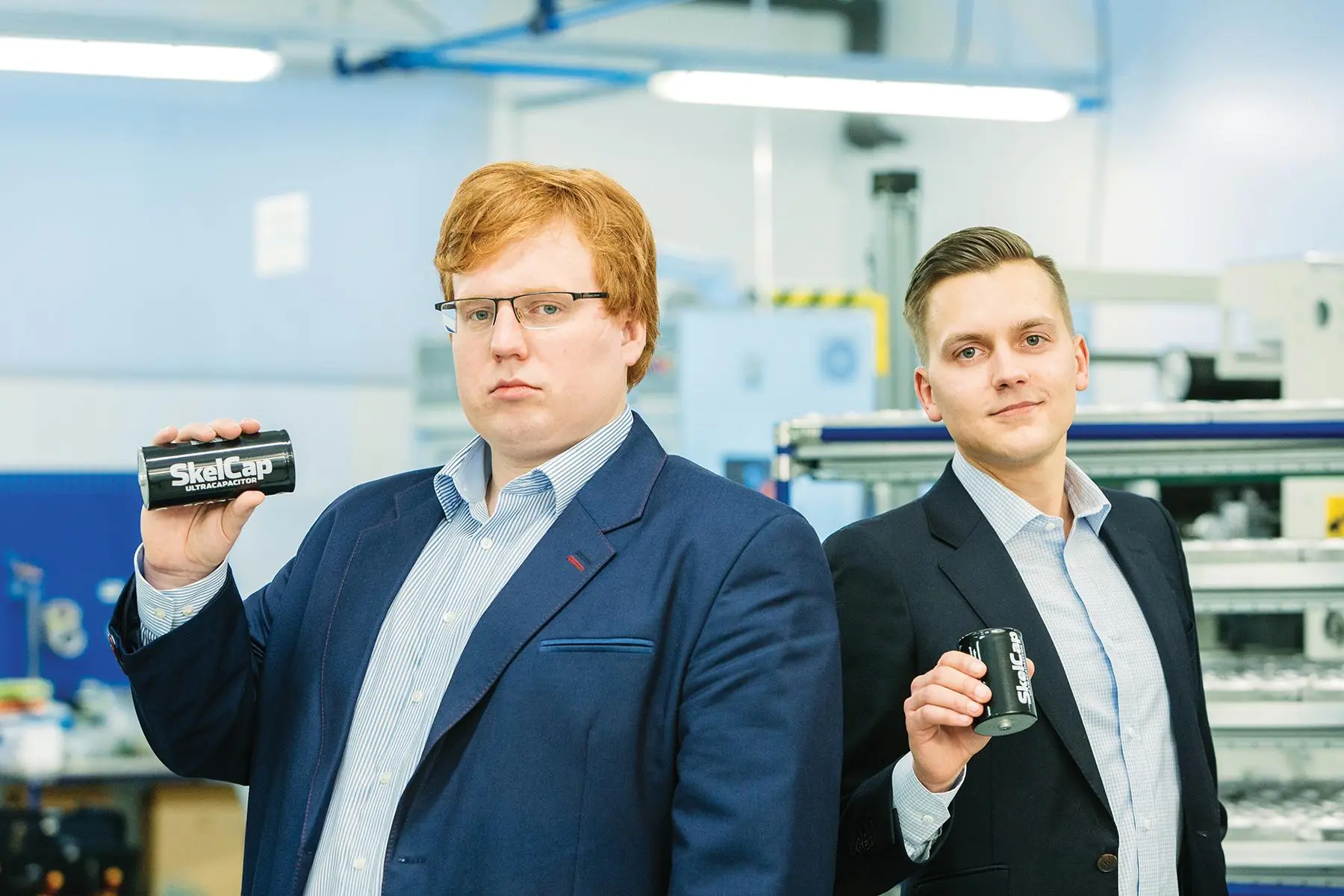
The story of Skeleton Technologies began in 2009 when four visionaries came together in Tartu, Estonia, to commercialise breakthrough graphene-based supercapacitor technology. Co-founders Taavi Madiberk and Oliver Ahlberg, alongside Dr. Jaan Leis and Dr. Anti Perkson, recognised the untapped potential of ultracapacitor technology to address critical energy storage challenges facing modern industries.
Taavi Madiberk: A Visionary CEO
Taavi Madiberk, CEO and co-founder of Skeleton Technologies, brings a unique blend of entrepreneurial drive and technical understanding to the company’s leadership. His early exposure to ultracapacitor technology came through his father, a scientist who worked in the field, sparking Madiberk’s interest during his middle school years. This early fascination laid the groundwork for what would become one of Europe’s most successful deep-tech startups.
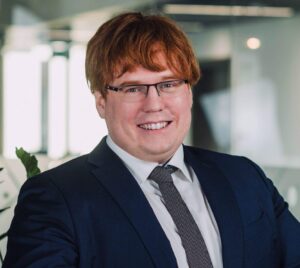
Before founding Skeleton Technologies, Madiberk gained valuable experience across multiple sectors, including IT, locomotive industries, and NGOs. Notably, he served as the youngest-ever Chairman of the Supervisory Board of Estonian Railways (AS Eesti Raudtee) from 2012 to 2014, a position that provided crucial insights into large-scale infrastructure and transportation challenges. He also served as a Member of the Supervisory Board of RKAS, an Estonian state-owned real estate company.
Madiberk’s leadership has earned significant recognition in the business and innovation communities. In 2016, Forbes named him to their prestigious 30 Under 30 list for science and healthcare in Europe, acknowledging his contributions to ultracapacitor technology and his role in building a world-class European manufacturer. He was also featured in the New Europe 100 project in 2015, which highlights outstanding innovators from Central and Eastern Europe. In 2023, the leading Estonian business publication Äripäev named him Industrialist of the Year, cementing his status as one of Europe’s most influential industrial leaders.
Oliver Ahlberg: Co-Founder and Strategic Operations Leader
Oliver Ahlberg serves as co-founder and Chairman of the Board at Skeleton Technologies, playing a critical role in the company’s operational excellence and strategic development. With a law degree from the University of Tartu, Ahlberg brought diverse experience from the IT and legal sectors, having previously worked in San Francisco and Tallinn.
Before Skeleton Technologies, Ahlberg co-founded digital media company Vigvam Studio and a daily deals site that was acquired by the market leader in 2010. His entrepreneurial background and operational expertise have been instrumental in establishing the company’s robust internal procedures, securing venture capital funding, setting up the R&D center in Estonia, and leading production optimisation efforts. Ahlberg has been central to the company’s IT capabilities, production systems, and daily administration, ensuring Skeleton Technologies maintains its position at the forefront of energy storage development.
The Scientific Foundation
The scientific backbone of Skeleton Technologies rests on the groundbreaking work of Dr. Jaan Leis and Dr. Anti Perkson, whose research into carbide-derived carbon materials and graphene-based energy storage formed the technological foundation of the company. Their academic expertise combined with Madiberk and Ahlberg’s entrepreneurial approach created the perfect balance between cutting-edge science and commercial viability.
Revolutionary Technology: Understanding Curved Graphene
At the heart of Skeleton Technologies’ competitive advantage lies Curved Graphene, a proprietary raw material that represents one of the most significant technological breakthroughs in energy storage in the past two decades. This innovative material fundamentally differs from traditional graphene and enables performance levels that were previously considered impossible in supercapacitor applications.
What Makes Curved Graphene Different
Traditional graphene consists of flat, single-layer sheets of carbon atoms arranged in a hexagonal lattice. While standard graphene offers excellent conductivity and surface area, its flat structure limits its effectiveness in energy storage applications. Curved Graphene, by contrast, resembles crumpled sheets of paper at the nanoscale level, creating complex three-dimensional structures with dramatically increased surface area and edge exposure.
This unique three-dimensional architecture provides several critical advantages. The curved and folded structure creates more accessible surfaces for energy storage, allowing for significantly higher capacitance. The increased edge density improves electrical conductivity and reduces internal resistance, enabling faster charging and discharging cycles. Most importantly, the material can be integrated into electrode systems far more effectively than flat graphene sheets, making it suitable for mass production and commercial applications.
Skeleton Technologies produces Curved Graphene through a proprietary process at their subsidiary, Skeleton Materials, located in the Bitterfeld-Wolfen chemical park in Germany. The production method uses silicon carbide as a starting material, avoiding the need for mined or rare earth metals. This approach ensures a sustainable, European-based supply chain that reduces dependence on critical raw materials sourced from outside Europe.
Performance Advantages of Curved Graphene Technology
The implementation of Curved Graphene in Skeleton’s products delivers measurable performance improvements. The material enables up to 72% increase in energy density compared to conventional supercapacitor materials, while maintaining the high-power characteristics that make supercapacitors valuable for demanding applications. Internal resistance drops significantly, with Skeleton’s supercapacitors achieving ESR (Equivalent Series Resistance) values as low as 0.2-1.6mΩ in single-cell configurations.
Independent testing, including evaluations by the US Navy, has confirmed that Skeleton’s supercapacitors outperform competing products by substantial margins. The Navy’s comparative analysis found Skeleton’s technology superior to four other leading supercapacitor manufacturers in terms of power density, energy density, and overall performance characteristics.
Comprehensive Product Portfolio
Skeleton Technologies has developed an extensive range of energy storage solutions, each optimised for specific applications and industries. The company’s vertical integration, from raw materials to complete systems, ensures consistent quality and performance across its entire product line.
SkelCap Supercapacitor Series
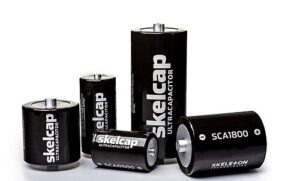
The SkelCap supercapacitor line represents Skeleton’s core product offering, available in industry-standard D60 and D33 form factors. These cells deliver exceptional power density with extremely low internal resistance, long operational lifetimes exceeding 1 million charge-discharge cycles, and reliable performance across temperatures ranging from -40°C to 65°C. The D60 format has become the most popular cell size in the supercapacitor industry, while the D33 format serves specialised applications in automotive and data center environments where space constraints demand smaller components.
SkelCap cells are available with voltage ratings of 2.85V or 3.0V, allowing engineers to optimise designs for specific power or energy requirements. The cells have received UL 810A certification, confirming their safety for use in automotive applications and uninterruptible power supplies. Additionally, Skeleton has obtained IATF 16949 certification, the international quality standard for the automotive industry, demonstrating the company’s commitment to manufacturing excellence.
SuperBattery Technology
Skeleton’s SuperBattery represents a groundbreaking hybrid technology that bridges the gap between traditional supercapacitors and lithium-ion batteries. This innovative solution combines the high-power capabilities and safety characteristics of supercapacitors with significantly increased energy capacity, making it ideal for applications requiring both substantial energy storage and rapid power delivery within 15 to 30-minute duty cycles.
SuperBattery technology offers several compelling advantages over conventional batteries. It charges in less than 90 seconds, eliminating the long charging breaks required by traditional battery systems. The technology delivers more than 10 times the charge-discharge cycle life compared to lithium-ion batteries, with performance exceeding 30,000 cycles in demanding applications. Safety represents another critical advantage, as SuperBatteries pose no risk of thermal runaway, require no thermal propagation measures, and remain safe even when pierced, crushed, or overheated.
The environmental profile of SuperBattery technology further distinguishes it from conventional batteries. The cells contain no cobalt, nickel, graphite, or copper, addressing supply chain concerns and ethical sourcing challenges associated with these critical materials. Production takes place at Skeleton’s 50 million euro SuperBattery factory in Varkaus, Finland, which opened in 2024 as Europe’s first facility producing high-power batteries specifically for AI data centers and mission-critical computing applications.
The Varkaus factory holds special significance in European battery manufacturing history. The site was originally owned by European Batteries Oy, a pioneer that produced Europe’s first Lithium Iron Phosphate (LFP) batteries. By reviving this historic facility, Skeleton has reinvigorated Finland’s battery ecosystem and established a crucial node in Europe’s energy storage value chain.
Modular Systems and Integrated Solutions
Beyond individual cells, Skeleton Technologies offers comprehensive modular systems and complete turnkey solutions designed for specific applications. The SkelMod product line provides pre-engineered modules in various configurations, including the SkelMod 51V 177F, which holds the distinction of being the only rail-certified supercapacitor module available on the market. These modules integrate Skeleton’s high-performance cells with sophisticated battery management systems, power electronics, and safety features.
For larger-scale applications, Skeleton designs and manufactures complete energy storage systems. The SkelGrid systems deliver grid-scale energy storage capable of supplying tens of megawatts in seconds, making them suitable for utility-scale applications and large industrial installations. GrapheneGPU, the company’s latest innovation for AI data centers, comes as a complete rack-mountable solution that includes power electronics, software controls, and system integration, enabling data center operators to deploy the technology without extensive engineering work.
Transforming Industries: Key Application Sectors
Skeleton Technologies serves diverse markets where high-power, reliable energy storage makes critical differences in performance, efficiency, and economics. The company’s solutions address fundamental challenges across multiple sectors, from stabilising national power grids to enabling the AI revolution.
AI Data Centers: Powering the Computing Revolution
The explosive growth of artificial intelligence has created unprecedented power management challenges for data center operators. Unlike traditional computing workloads that maintain relatively steady power consumption, AI operations, particularly during model training and inference, create dramatic power fluctuations. GPU clusters can swing from idle states drawing tens of megawatts to peak loads of hundreds of megawatts within milliseconds, then crash back down just as quickly.
These rapid power fluctuations create enormous challenges. Grid infrastructure must be oversised to handle peak loads, resulting in substantial capital expenditure for connections that remain underutilised most of the time. To maintain grid stability, data centers often run artificial calculations on GPUs, creating “dummy loads” that smooth power demand but waste enormous amounts of energy. Current estimates suggest approximately 40% of AI energy consumption goes to managing these power fluctuations rather than performing useful computations.
Skeleton Technologies developed GrapheneGPU specifically to address these challenges. This innovative solution uses curved graphene-based supercapacitors to absorb power spikes during intensive computing and releases stored energy during low-demand periods, maintaining smooth power delivery to the grid. The system operates at microsecond speeds, fast enough to buffer the rapid fluctuations characteristic of AI workloads.
The benefits for data center operators prove substantial. GrapheneGPU can reduce total electricity consumption by up to 44% by eliminating wasted energy from dummy loads and reducing cooling requirements. The technology unlocks up to 40% more computing power from existing GPU infrastructure by preventing thermal throttling and power limitations. Grid connection requirements can be reduced by similar margins, either lowering initial infrastructure costs for new facilities or enabling greater compute density in existing buildings with limited power capacity.
Major technology companies have recognised the value of this approach. Skeleton Technologies works with leading US cloud operators and AI infrastructure companies, deploying GrapheneGPU solutions in hyperscale data centers. The company’s partnership with Acbel resulted in GrapheneBBU, a battery backup unit combining SuperBattery technology with sophisticated power management, providing both peak shaving and uninterruptible power supply functionality in a single integrated system.
Grid Stability and Energy Infrastructure
Electric power grids face mounting challenges as renewable energy adoption accelerates and electricity demand grows. Wind and solar generation introduce inherent variability, creating power quality issues and frequency fluctuations that threaten grid stability. The 2025 Iberian Peninsula blackout dramatically illustrated these vulnerabilities, affecting millions of people when renewable fluctuations overwhelmed grid stabilisation systems.
Skeleton Technologies provides critical infrastructure for grid operators facing these challenges. The company’s supercapacitor systems deliver instantaneous power injection or absorption, responding to frequency deviations and voltage fluctuations within milliseconds. This ultra-fast response time proves essential for modern grids, where renewable energy can create rapid changes that traditional spinning reserve generators cannot address quickly enough.
German transmission system operators have deployed Skeleton supercapacitors as a last line of defense, with 200 MW installations providing 1.25 seconds of emergency stabilisation. This brief but critical window allows other systems to activate and prevents cascading failures that could lead to widespread blackouts. The European Commission estimates that 584 billion euros in investment will be needed by 2030 to modernise Europe’s electricity networks, with fast-response energy storage representing a crucial component of these upgrades.
Skeleton’s solutions excel in grid applications due to their exceptional reliability and longevity. With operational lifetimes exceeding 15 years and over 1 million charge-discharge cycles, supercapacitor systems require minimal maintenance while delivering consistent performance. The technology operates efficiently across extreme temperature ranges, from Arctic conditions to desert heat, ensuring reliable operation regardless of climate or location.
Current customers include industry leaders such as Hitachi Energy, Siemens, and General Electric, who integrate Skeleton’s technology into grid stabilisation systems, substations, and renewable energy installations. The company supplies systems ranging from small installations for local grid support to massive 100 MW+ power banks for utility-scale applications.
Transportation and Automotive Applications
The transportation sector represents one of Skeleton Technologies’ most established markets, with applications ranging from urban transit systems to heavy-duty commercial vehicles and automotive performance applications. The company’s technology addresses critical challenges in vehicle electrification, energy efficiency, and reliable operation under demanding conditions.
Kinetic Energy Recovery Systems (KERS) showcase supercapacitor technology at its finest. When vehicles brake, they convert kinetic energy into electricity that would otherwise be wasted as heat. Supercapacitors capture this energy instantly and store it for the next acceleration, significantly improving fuel efficiency and reducing emissions. Skeleton has implemented KERS solutions in trams, buses, trucks, cranes, and even elevators, delivering energy savings of 30% to 50% depending on the application.
Urban transit systems have widely adopted Skeleton’s solutions. The company supplies supercapacitors for the Mannheim tram system through its partnership with Škoda Electric, and provides technology for the Warsaw tram network through collaboration with Medcom. In both cases, the SkelMod 51V module enables substantial energy savings with onboard kinetic energy recovery, capturing braking energy and using it for acceleration.
Wayside energy storage systems represent another significant application in rail transportation. Polish electrical switchgear manufacturer ZPUE contracted with Skeleton to provide 200 MW per year of supercapacitors for rail wayside storage from 2023 to 2025. These systems, located at stations rather than on trains, capture energy as trains brake and provide it back for acceleration, reducing overall network energy consumption while improving power quality.
Heavy-duty vehicles benefit enormously from supercapacitor-based engine starting systems. Diesel engines in trucks, mining equipment, and construction machinery require substantial power to start, particularly in cold weather conditions. Traditional batteries degrade rapidly under these demanding duty cycles and perform poorly at low temperatures. Skeleton’s SkelStart modules deliver reliable engine starting in temperatures as low as -40°C, with lifetimes measured in millions of starts rather than the thousands typical of battery-based systems.
The automotive industry has increasingly adopted Skeleton’s technology for performance and efficiency applications. Honda Performance Development uses Skeleton supercapacitors in their racing programs, while several Tier 1 automotive manufacturers have integrated the technology into production vehicles. The company also supplies components to the NTT IndyCar series, where supercapacitors provide the high-power bursts needed for push-to-pass systems and energy recovery.
Industrial Applications and Special Sectors
Skeleton Technologies serves numerous industrial sectors where reliable high-power energy storage proves critical. In the maritime industry, the company provides solutions for vessel power management, shore power systems, and marine propulsion assistance. Oil and gas operations use Skeleton’s technology for wellhead equipment, safety systems, and emergency shutdown mechanisms where reliability in harsh environments proves essential.
The company developed specialised solutions for cranes and material handling equipment. At Transiidikeskus, one of the largest container terminals in the Baltic Region, Skeleton implemented a crane equipped with a graphene supercapacitor-powered KERS system. The installation reduced fuel consumption and CO2 emissions by 34% while improving operational efficiency and reducing maintenance requirements compared to traditional diesel-hydraulic systems.
Medical equipment represents another important application area. Devices requiring high-power bursts benefit from supercapacitor backup systems that provide reliable emergency power without the degradation characteristics of chemical batteries. The technology’s long shelf life and maintenance-free operation make it ideal for medical applications where reliability cannot be compromised.
Aerospace applications showcase Skeleton’s technology at its most demanding. The company has maintained a long-standing relationship with the European Space Agency (ESA), dating back to 2011 when Skeleton began developing SpaceCap ultracapacitors specifically for space applications. The collaboration has produced three continuous projects, with Skeleton’s ultracapacitors tested and deployed in space systems where extreme reliability, temperature tolerance, and long operational lifetimes prove absolutely critical.
The defense sector increasingly relies on Skeleton’s technology for mission-critical applications. Military systems require power sources that deliver high performance, operate reliably under extreme conditions, and maintain operational readiness over extended periods. Skeleton’s supercapacitors meet these demanding requirements, providing backup power, pulse power delivery, and energy storage for defense systems where failure is not an option.
Strategic Manufacturing and European Value Chain
Skeleton Technologies has invested heavily in manufacturing infrastructure across Europe, establishing a vertically integrated production ecosystem that spans from raw materials to complete systems. This European focus ensures supply chain security, reduces dependence on imported critical materials, and strengthens the continent’s strategic autonomy in energy storage technologies.
Leipzig SuperFactory: World’s Largest Supercapacitor Production Site
The centerpiece of Skeleton’s manufacturing expansion opened in November 2024 in Markranstädt, near Leipzig, Germany. This 220 million euro facility, developed in partnership with Siemens, represents the world’s largest and most advanced supercapacitor production site. The Leipzig SuperFactory manufactures Skeleton’s latest graphene-based supercapacitors, with initial capacity to produce 12 million cells annually.
The facility employs cutting-edge manufacturing technology, including automated production lines, advanced quality control systems, and sophisticated testing equipment. Siemens contributed expertise in industrial automation, control systems, and production optimisation, ensuring the facility operates at maximum efficiency. The factory creates approximately 420 new jobs in Saxony, contributing to Germany’s industrial revival and strengthening the region’s position as a European manufacturing hub.
Production at the Leipzig SuperFactory focuses particularly on components for GrapheneGPU systems destined for AI data centers, as well as cells and modules for grid stabilisation applications. The facility’s strategic location in eastern Germany provides excellent logistics access to both Western European customers and emerging markets in Central and Eastern Europe.
Established German Manufacturing
Before the Leipzig expansion, Skeleton operated two facilities in Germany. The company’s materials development facility in Bitterfeld-Wolfen produces Curved Graphene raw material, maintaining control over this critical input and ensuring consistent quality. The Dresden facility in Großröhrsdorf, which began operations in 2017, holds ISO 9001 and 14001 certifications and serves as Europe’s largest supercapacitor factory prior to Leipzig’s opening. This facility continues to produce supercapacitor cells, modules, and systems, with capacity exceeding 1 million units annually.
Finnish SuperBattery Production
The Varkaus SuperBattery factory in Finland, which opened in 2024 with a 50 million euro investment, produces one gigawatt of battery power for AI data centers, grid stability, mobility, and defense applications. The facility manufactures SuperBattery cells and integrated battery backup units, employing over 65 people with plans to grow to more than 200 employees by 2029.
The Varkaus factory incorporates niobium-based electrode materials supplied by CBMM, a Brazilian niobium producer. These advanced materials enhance battery safety, performance, and lifetime, enabling faster charging, longer durability, and greater reliability for demanding AI and industrial applications. The partnership with CBMM demonstrates Skeleton’s commitment to using the most advanced materials available to optimize performance.
Estonian Headquarters and R&D
Skeleton Technologies maintains its headquarters in Tallinn, Estonia, where the company was founded. The Estonian facility houses over 130 employees focused on research and development, IT systems, module development, and company administration. This central location coordinates the company’s global operations, maintains customer relationships, and drives ongoing innovation in energy storage technology.
The company’s commitment to Estonian engineering extends beyond its own operations. Skeleton offers scholarships to Estonian engineering and technology graduate students, supporting the next generation of innovators. The company has also provided internships to numerous local students, with many choosing to continue their careers at Skeleton Technologies after completing their studies.
Upcoming French Expansion
In May 2024, Skeleton Technologies announced plans to invest 600 million euros to construct a graphene-based battery cell plant and research center near Toulouse in southern France. The facility, scheduled to begin production in 2027, will create up to 300 jobs and produce high-power energy storage cells for industrial applications with 15-minute duty cycles, along with supercapacitors.
Skeleton’s CEO Taavi Madiberk announced this expansion during French President Emmanuel Macron’s “Choose France” summit, highlighting the company’s confidence in France as a manufacturing location. The Occitanie region offers proximity to existing and potential customers in aerospace, defense, and industrial sectors, access to world-class research institutions, and a strong talent pool. The region hosts the headquarters of aircraft manufacturer Airbus and the aerospace unit of Thales, creating natural synergies with Skeleton’s technology.
French Economy and Finance Minister Bruno Le Maire welcomed the investment, noting that it aligns with France’s re-industrialization strategy. The decision to locate in France followed competitive evaluations of several European locations, with France’s government support, competitive subsidies, and stable nuclear energy supply proving decisive factors.
Funding and Financial Development
Skeleton Technologies has secured substantial financial backing throughout its development, raising over 328 million dollars (approximately 300 million euros) from a diverse group of strategic and financial investors. This strong financial foundation has enabled the company’s aggressive expansion strategy and supported the development of its advanced manufacturing infrastructure.
Early Funding Rounds
The company’s first significant funding came in 2013, with a 2.2 million euro Round A financing that allowed Skeleton to begin scaling operations. In 2015, the company raised additional funding and opened its first manufacturing facility in Viimsi, Estonia. These early investments came primarily from venture capital firms and technology-focused investors who recognized the potential of Skeleton’s proprietary technology.
Major Investment Rounds
By 2020, Skeleton had completed a Series D financing round, raising 41.3 million euros from leading European entrepreneurs and strategic investors. This round included participation from executives and co-founders of successful European companies including Adyen, Wise, and CTEK. EIT InnoEnergy, Europe’s leading cleantech investor and an early backer of battery gigafactory startup Northvolt, also participated significantly in this round.
The Series D financing brought Skeleton’s total funding to over 93 million euros at that time. Existing investors including FirstFloor Capital, MM Grupp, and Harju Elekter (Nasdaq Tallinn: HAE1T) joined the round, demonstrating continued confidence in the company’s strategy and technology.
Subsequent funding rounds have added strategic investors including Marubeni Corporation, a major Japanese trading conglomerate with interests in energy and infrastructure; Siemens Financial Services, reflecting the German industrial giant’s strategic interest in Skeleton’s technology; and CBMM, the Brazilian niobium producer that supplies advanced materials for Skeleton’s SuperBattery products.
Public and Grant Funding
Beyond private investment, Skeleton Technologies has secured significant public funding and grants from European institutions. The European Investment Bank provided 15 million euros in quasi-equity financing to support the company’s growth. The European Innovation Council contributed 2.5 million euros to support doubling the capacity of Skeleton’s graphene supercapacitors through the SKLCARBONP2 project.
Horizon Europe, the European Union’s research and innovation program, has provided funding for multiple Skeleton projects. The company also received support from the North Savo ELY Centre in Finland for the Varkaus SuperBattery factory, and participated in the Norway Grants “Green ICT” program, a cooperation initiative between Estonia and Norway promoting sustainable development and green technology innovation.
Skeleton Technologies IPO: Path to Public Markets
Skeleton Technologies has publicly indicated its intention to pursue an initial public offering, positioning itself to become one of Europe’s most significant cleantech listings. The company’s IPO plans reflect its maturation from startup to industrial-scale manufacturer and its ambition to compete globally in the rapidly growing energy storage market.
Timeline and Strategic Preparation
In May 2024, CEO Taavi Madiberk announced that Skeleton Technologies aims to be “IPO-ready in 2027.” This timeline aligns with the opening of the company’s French manufacturing facility and the maturation of its German and Finnish production capabilities. The three-year preparation period allows Skeleton to demonstrate consistent revenue growth, establish its position in key markets, and build the operational scale attractive to public market investors.
The company has not specified which stock exchange will host the listing, though major European exchanges including Frankfurt, London, Amsterdam, and possibly New York remain under consideration. The choice of exchange will likely reflect the company’s investor base, customer concentration, and strategic preferences regarding liquidity and analyst coverage.
Pre-IPO Investment Opportunities
While Skeleton Technologies remains privately held, accredited investors can access pre-IPO shares through secondary market platforms such as EquityZen. These platforms enable existing shareholders, including employees and early investors, to sell portions of their holdings before the company goes public. However, such opportunities remain limited and require accreditation status, with significant minimum investment requirements.
The company’s pre-IPO valuation has not been publicly disclosed, though industry observers widely consider Skeleton Technologies to be Estonia’s next potential unicorn, a company valued at over 1 billion dollars. Given the company’s technology leadership, strong financial backing, and expanding manufacturing footprint, market analysts expect a substantial valuation at IPO.
Market Context and Investment Appeal
Skeleton’s IPO plans come at a time of intense interest in energy storage and cleantech companies. The rapid growth of renewable energy, electric vehicles, and AI infrastructure drives demand for advanced energy storage solutions. Investors have shown strong appetite for companies positioned at the intersection of these megatrends.
The company’s position differs from pure battery manufacturers like Northvolt or QuantumScape, which focus on traditional electrochemical storage. Skeleton’s supercapacitor and SuperBattery technology addresses the high-power, fast-response segment of the market, serving applications where traditional batteries prove inadequate. This specialized positioning potentially offers higher margins and less direct competition from Asian battery manufacturers.
Furthermore, Skeleton Technologies can credibly claim to be a European champion in advanced manufacturing, with its fully integrated value chain from raw materials to systems. This European focus appeals to investors and policymakers concerned about supply chain security and technological sovereignty.
Innovation and Intellectual Property
Skeleton Technologies has built formidable intellectual property protection around its technology, holding more than 70 patent families covering every aspect of its value chain from raw materials to complete systems. This extensive patent portfolio creates substantial barriers to entry for potential competitors and protects the company’s technology leadership.
The patents span multiple domains. Material patents cover the production and properties of Curved Graphene, including the synthesis processes and specific material characteristics. Cell design patents protect the electrode structures, electrolyte formulations, and assembly methods that enable Skeleton’s supercapacitors to outperform competing products. Module and system patents cover power electronics, battery management systems, and integration approaches for applications ranging from data centers to grid installations.
This comprehensive IP strategy extends beyond defensive protection. Skeleton actively licenses technology to partners and customers in specific applications, creating additional revenue streams while expanding the adoption of its core technology. The company’s willingness to collaborate with major industrial partners like Siemens, while maintaining control of core innovations, demonstrates sophisticated IP management.
Global Customer Base and Strategic Partnerships
Skeleton Technologies serves an impressive roster of global customers spanning multiple industries. In the automotive sector, partnerships include Honda Performance Development, Martinrea Effenco, and several Tier 1 manufacturers. Transportation customers include Škoda Electric, CAF Group, Wrightbus, and numerous transit authorities worldwide.
Industrial equipment manufacturers including Siemens, General Electric, and Hitachi Energy integrate Skeleton’s technology into their products and systems. The European Space Agency remains a long-term customer, reflecting the extreme reliability and performance of Skeleton’s products. Shell, the global energy company, uses Skeleton’s solutions for various applications across its operations.
These partnerships extend beyond simple supply relationships. Many involve joint development efforts, technology sharing, and co-marketing initiatives. For example, the partnership with Siemens encompasses manufacturing cooperation at the Leipzig SuperFactory, technology integration in grid systems, and joint customer engagements. Similarly, collaboration with Acbel produced the GrapheneBBU product specifically tailored for AI data center requirements.
Competitive Landscape and Market Position
Skeleton Technologies competes in the global energy storage market against various players, though few directly compete across all the company’s application areas. Traditional supercapacitor manufacturers like Maxwell Technologies (acquired by Tesla in 2019) and Eaton produce competing products, though independent testing suggests Skeleton maintains substantial performance advantages.
In the emerging SuperBattery market, Skeleton faces different competition from established battery manufacturers and startups developing advanced battery chemistries. However, Skeleton’s unique positioning in the high-power, fast-charging segment creates a distinct market niche where few competitors can match performance specifications.
The company’s key competitive advantages include its proprietary Curved Graphene material, extensive patent protection, vertically integrated European manufacturing, proven track record with tier-one customers, and comprehensive product portfolio spanning cells to complete systems. These factors combine to create a sustainable competitive position that will be difficult for competitors to replicate.
Environmental Impact and Sustainability
Skeleton Technologies’ commitment to sustainability extends throughout its operations and products. The company’s energy storage solutions enable substantial environmental benefits across multiple application areas. In transportation, KERS systems reduce fuel consumption and emissions by 30% to 50%, directly decreasing carbon footprints. Grid stabilization applications enable greater renewable energy adoption by smoothing power fluctuations that would otherwise limit wind and solar deployment.
The materials used in Skeleton’s products reflect careful consideration of environmental and ethical concerns. Unlike lithium-ion batteries, Skeleton’s supercapacitors and SuperBatteries contain no lithium, cobalt, manganese, nickel, or graphite. This composition eliminates supply chain concerns related to mining practices in developing countries, reduces dependence on geopolitically sensitive materials, and simplifies end-of-life recycling.
The European value chain further enhances sustainability credentials. By producing Curved Graphene from readily available materials sourced in Europe, Skeleton avoids the environmental impact of long-distance shipping and reduces carbon footprint associated with raw material procurement. Manufacturing facilities in Germany, Finland, and Estonia operate under strict European environmental regulations, ensuring responsible production practices.