

Lila Sciences is a Cambridge, Massachusetts-based technology company building the world’s first scientific superintelligence platform and fully autonomous laboratories for life, chemical, and materials sciences. Founded in 2023 by Flagship Pioneering, Lila Sciences emerged from stealth in March 2025 with $200 million in seed capital and subsequently raised an additional $350 million in Series A funding, bringing total capital to $550 million at a valuation exceeding $1.3 billion.
The company’s mission centres on applying artificial intelligence to every aspect of the scientific method, from generating hypotheses and designing experiments to running them with robotics, learning from results, and iterating continuously. This approach aims to accelerate discovery far beyond human capacity alone, addressing humanity’s greatest challenges in health, sustainability, and materials science.
The Founding Story: From Flagship Labs to Global Vision
Lila Sciences originated in Flagship Pioneering’s innovation foundry, Flagship Labs, where General Partner Geoffrey von Maltzahn began developing the concept in 2023. As someone who had already co-founded multiple groundbreaking companies at the intersection of biology and data science, von Maltzahn recognised a fundamental limitation in scientific progress: the scientific method itself remained constrained by human speed and scale.
Traditional scientific discovery follows a familiar pattern. Scientists generate hypotheses based on existing knowledge, design experiments to test those hypotheses, run experiments in laboratories, analyse results, draw conclusions, and begin the cycle again. Whilst this method has served humanity well for centuries, it suffers from inherent bottlenecks. Humans can only process limited amounts of information, design a finite number of experiments, and physically conduct research at a pace measured in days, weeks, or months per iteration.
Von Maltzahn and his co-founders at Flagship, including company Chairman Noubar Afeyan, hypothesised that artificial intelligence combined with autonomous laboratory systems could fundamentally transform this equation. By scaling experimentation orders of magnitude beyond current capacity, they believed emergent abilities would unlock discoveries that remain hidden at smaller scales. This conviction led to the creation of Lila Sciences with the explicit goal of building scientific superintelligence.
The company remained in stealth mode for nearly two years, developing its core technology and demonstrating proof of concept before its public unveiling in March 2025. During this stealth period, Lila Sciences assembled a world-class team, established its first AI Science Factory in Cambridge, and generated thousands of discoveries across multiple scientific domains, providing validation for its audacious vision.
Leadership Team: Bringing Together Science, AI, and Entrepreneurship
Geoffrey von Maltzahn: Co-Founder and Chief Executive Officer
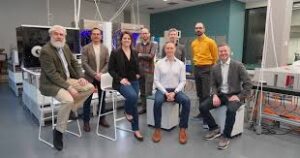
Geoffrey von Maltzahn serves as CEO and co-founder of Lila Sciences whilst maintaining his role as General Partner at Flagship Pioneering. His track record speaks volumes. Von Maltzahn has co-founded companies that have achieved over $10 billion in aggregate public and private market capitalisation, including Tessera Therapeutics, Generate:Biomedicines, Indigo Agriculture, Sana Biotechnology, and Seres Therapeutics.
Von Maltzahn holds a PhD in Biomedical Engineering and Medical Physics from Massachusetts Institute of Technology, where his research focused on developing novel drug delivery systems and diagnostic technologies. His career trajectory demonstrates a consistent pattern of identifying transformative opportunities at the intersection of biology, data science, and engineering, then building companies to realise their potential.
At Flagship, von Maltzahn has pioneered the venture creation model, systematically developing new companies through Flagship Labs rather than waiting for entrepreneurs to approach with ideas. This approach enabled the creation of Lila Sciences with substantial resources and strategic support from inception, providing advantages most startups lack.
His vision for Lila Sciences centres on a simple but profound belief: competitive advantage in science will flow to those who can run the most brilliant next experiment with the highest intelligence, largest scale, and fastest speed. This conviction drives every aspect of Lila’s strategy, from technology development to facility expansion.
George Church: Chief Scientist and CRISPR Pioneer
George Church, one of the world’s most renowned geneticists, joined Lila Sciences as Chief Scientist, bringing unparalleled scientific credibility and vision to the company. Church is Professor of Genetics at Harvard Medical School and Professor of Health Sciences and Technology at Harvard and MIT, founding member of the Wyss Institute, and Director of PersonalGenomes.org.
Church’s scientific achievements read like a history of modern genomics and synthetic biology. He developed the first methods for genome sequencing and contributed to dramatic cost reductions, driving costs down from $3 billion to $600 per genome. His team invented CRISPR methods for human stem cell genome editing, opening revolutionary possibilities in genetic medicine. He pioneered synthetic biology applications ranging from creating organs for transplantation to gene therapies for aging reversal.
Beyond his scientific accomplishments, Church is known for taking ambitious swings on transformative projects. His work includes efforts to de-extinct the woolly mammoth by transplanting mammoth genes into Asian elephants using CRISPR, engineering pigs with 62 knocked-out endogenous retrovirus genes for organ transplantation into humans, and developing gene drives in mosquitoes to eradicate malaria.
Church has appeared multiple times on Thomson Reuters’ short-list for the Nobel Prize in Chemistry, specifically for his pioneering work on CRISPR. He was featured in Time magazine’s Time 100 list of most influential people in 2017 and ranked among the most influential people in biopharma by Fierce Pharma in 2022.
What drew Church to Lila Sciences was its focus on generating new proprietary data through autonomous experimentation rather than simply mining existing published research. Church observed that every new technology can typically redo almost everything in a field’s history within the first year, then multiply progress by factors of 10. This aligns perfectly with Lila’s vision of using high-throughput autonomous labs to generate vast quantities of novel experimental data.
Alexandra Sneider: Co-Founder and Head of Corporate Development
Alexandra Sneider co-founded Lila Sciences and plays a critical strategic role as Head of Corporate Development, shaping funding strategies and forging partnerships essential to the company’s growth. She earned her PhD in Chemical and Biomolecular Engineering from Johns Hopkins University and previously served as a Principal at Flagship Pioneering.
Sneider ensures that Lila’s scientific superintelligence initiatives are supported by robust business frameworks and aligned with industry demands. Her expertise in startup operations, chemical engineering, and business development has proven vital for the company’s rapid advancement and ability to attract major investors and partners.
Additional Key Leaders
- Jacob Feala serves as co-founder, instrumental in automating scientific research with AI-powered computational biology. His expertise bridges the gap between biological understanding and computational implementation.
- Scott Robertson, Chief Commercial Officer and co-founder, drives commercial strategy and establishes major industry partnerships. He holds an MBA from Harvard Business School and a Master’s in Data Science from UC Berkeley, with previous executive roles at Solugen and as Operating Principal at Flagship Pioneering.
- Jonathan Hennek, Chief Product Officer, leads cross-functional teams in building scalable, AI-empowered solutions that transform the landscape of scientific research. He is responsible for the design, development, and delivery of Lila’s flagship superintelligence platforms.
- Andrew Beam, Chief Technology Officer, brings machine learning expertise from Harvard University, where he conducted groundbreaking research in applying AI to healthcare and life sciences challenges.
Revolutionary Technology: AI Science Factories
The Core Concept
Lila Sciences calls its autonomous research facilities “AI Science Factories” or AISFs. These unified facilities integrate AI models with custom hardware and software to close the loop between reasoning and real-world experimentation. Von Maltzahn describes them as “scientific-method machines” where AI generates hypotheses, designs experiments, runs them, learns from results, and iterates continuously without human intervention in the execution loop.
The concept fundamentally reimagines how scientific research operates. Traditional labs require human scientists to manually design each experiment, prepare samples, run procedures, collect data, analyse results, and determine next steps. This process involves substantial time between iterations and limits the number of experiments that can be conducted in parallel.
AI Science Factories automate this entire workflow. Robotic systems handle sample preparation, liquid handling, analytical measurements, and data collection. Custom software orchestrates thousands of experiments simultaneously. AI models analyse results in real-time, identify patterns, generate new hypotheses, and design follow-up experiments without waiting for human direction.
The Technology Stack
Lila’s platform comprises several integrated components working in concert:
- Generative AI Models: These models generate hypotheses based on existing scientific knowledge, experimental results, and patterns identified in data. The models incorporate state-of-the-art scientific reasoning abilities, allowing them to propose experiments that a human scientist might not conceive.
- Experimental Design Algorithms: Once hypotheses are generated, specialised algorithms design experiments to test them. These algorithms consider available resources, equipment capabilities, materials inventory, experiment timelines, and optimal protocols to maximise learning whilst minimising cost and time.
- Robotic Laboratory Automation: Custom-built robotic systems execute experiments with precision and consistency impossible for humans. These systems handle liquid transfers, sample preparation, chemical synthesis, biological assays, materials fabrication, and analytical measurements across multiple modalities simultaneously.
- Real-Time Data Acquisition and Analysis: As experiments run, sensors and analytical instruments continuously collect data. AI systems analyse results in real-time, identifying successful outcomes, failed experiments, unexpected findings, and insights that should inform the next iteration.
- Knowledge Integration and Learning: Results feed back into AI models, continuously improving their understanding of the scientific domain. The system builds proprietary datasets far larger and more comprehensive than publicly available research data, enabling insights impossible with existing information alone.
Competitive Advantages
Lila Sciences’ approach offers several distinct advantages over traditional research methods and competing AI-for-science companies:
Proprietary Data Generation: Rather than relying solely on published research (which every competitor can access), Lila generates vast quantities of novel experimental data through its autonomous labs. This proprietary information provides competitive moats and enables discoveries others cannot make.
Closed-Loop Automation: Many companies use AI to analyse existing data or design experiments that humans then execute. Lila closes the entire loop, allowing AI to not only design but also run experiments and immediately incorporate results, dramatically accelerating iteration cycles.
Scale and Speed: AI Science Factories can run thousands of experiments simultaneously, operating 24/7 without human limitations. This scale enables systematic exploration of vast experimental spaces impossible with traditional approaches.
Multi-Domain Applicability: The platform works across life sciences, chemistry, and materials science, allowing insights from one domain to inform others and enabling discoveries at the intersection of disciplines.
Lila Sciences Funding: From Stealth to Unicorn Status
Seed Round: $200 Million Launch
Lila Sciences emerged from stealth in March 2025 with $200 million in seed funding, one of the largest seed rounds in biotechnology history. The round was led by Flagship Pioneering, with participation from General Catalyst, March Capital, ARK Venture Fund, Altitude Life Science Ventures, Blue Horizon Advisors, State of Michigan Retirement System, Modi Ventures, and a wholly owned subsidiary of the Abu Dhabi Investment Authority.
This substantial seed round enabled Lila to build out its first AI Science Factory in Cambridge, assemble a world-class team, and begin generating the thousands of discoveries the company showcased at launch. The scale of initial capital reflected investor conviction in the team, the technology, and the transformative potential of scientific superintelligence.
Lila Sciences Series A: $350 Million Growth Capital
In September and October 2025, Lila Sciences announced the close of its Series A funding in two parts, raising a total of $350 million and bringing aggregate capital to $550 million at a valuation exceeding $1.3 billion. This achievement solidified Lila’s unicorn status and positioned the company among the most valuable private AI companies focused on scientific research.
The Series A was co-led by Braidwell and Collective Global in the first close. The second close brought in strategic investors including NVentures (NVIDIA’s venture capital arm), Analog Devices (as part of Flagship’s existing partnership), IQT, Dauntless Ventures, Catalio Capital Management, Pennant Investors, and a group of investors from Peter Diamandis’ Abundance360 community.
These new investors joined existing partners from the seed round, creating a syndicate of world-class AI and science investors alongside scale capital representing more than $2 trillion in assets under management. Importantly, the primary beneficiaries of these institutional investors include retirement systems, teachers, working parents, their families, and institutions building technologies that improve lives.
The investor composition reflects Lila Sciences’ strategic positioning. Technical partners like NVIDIA bring capabilities to accelerate platform development and global expansion. National security-focused investors like IQT and Dauntless Ventures recognise Lila’s importance to US technological competitiveness. Scale capital providers offer patient capital aligned with Lila’s long-term vision rather than demanding quick exits.
Use of Lila Sciences Funding
The $550 million in total capital serves several strategic priorities:
AI Science Factory Expansion: The primary use of funds supports building out additional facilities in Boston, San Francisco, and London. Each factory requires substantial capital for robotics, analytical equipment, facility infrastructure, and software systems. The global footprint enables Lila to access diverse talent pools, serve customers in multiple time zones, and establish presence in key scientific hubs.
Technology Development: Continuous improvement of AI models, automation systems, and software platforms requires significant R&D investment. Lila allocates substantial resources to advancing the state of the art in scientific AI, robotics, and data analysis.
Team Growth: Scaling scientific superintelligence demands exceptional talent across multiple disciplines. Lila uses funding to recruit leading researchers in AI, robotics, synthetic biology, materials science, chemistry, and engineering, building a team capable of pushing boundaries across all dimensions simultaneously.
Commercial Infrastructure: Bringing scientific superintelligence to market requires customer success teams, commercial partnerships, legal and regulatory expertise, and operational infrastructure to support partnerships with pharmaceutical companies, materials developers, and other customers.
Data Generation: Running thousands of experiments continuously requires ongoing investment in reagents, materials, consumables, equipment maintenance, and facility operations. Unlike software companies with minimal marginal costs, Lila’s business model involves substantial ongoing experimental expenses that generate its proprietary data assets.
Also Read: Lightrock: The Global Impact Investment Platform Backing Purpose-Driven Entrepreneurs
Scientific Achievements and Proof Points
Lila Sciences has demonstrated remarkable progress in the brief period since its 2023 founding. The company claims its platform has already led to thousands of discoveries across multiple scientific domains, providing concrete evidence that scientific superintelligence represents more than theoretical potential.
Genetic Medicine Breakthroughs
Lila’s AI Science Factories have generated genetic medicine constructs that outperform commercially available therapeutics in preclinical testing. The platform designs novel mRNA sequences, optimises delivery vehicles, and tests efficacy across multiple cell types and disease models simultaneously. This work demonstrates the potential to accelerate therapeutic development timelines from years to months whilst improving outcomes.
The company has discovered and validated hundreds of new antibodies, peptides, and binders for a broad range of therapeutic targets. Traditional antibody discovery campaigns typically screen millions of candidates to identify a handful of viable therapeutic leads over 12 to 18 months. Lila’s platform generates and tests candidates at dramatically higher throughput, identifying promising therapeutics in weeks whilst exploring far larger sequence spaces.
Materials Science Innovations
Lila Sciences has developed novel catalysts for green hydrogen production, addressing one of the critical bottlenecks in clean energy transition. Hydrogen produced through water electrolysis using renewable energy offers a clean fuel and industrial feedstock, but current catalysts remain expensive and insufficiently efficient for widespread adoption. Lila’s platform systematically explores catalyst formulations at scales impossible with traditional methods.
The company has also created advanced carbon capture materials with superior performance characteristics compared to existing solutions. As climate change accelerates, carbon capture and sequestration technologies become increasingly critical. Lila’s ability to rapidly design, synthesise, and test novel materials positions the company to contribute meaningfully to climate solutions.
AI Model Capabilities
Beyond specific discoveries, Lila has developed large language models with state-of-the-art scientific reasoning abilities. These models understand complex scientific concepts, generate meaningful hypotheses, design valid experiments, and interpret results with sophistication approaching or exceeding human scientists in narrow domains.
The proprietary data generated through AI Science Factories enables these models to surpass capabilities achievable through training on public data alone. Whilst competitors train on published papers and existing databases, Lila’s models learn from millions of novel experiments conducted specifically to expand scientific understanding.
Applications and Market Opportunity
Pharmaceutical and Biotechnology
Drug discovery and development represents Lila Sciences’ most obvious market opportunity. The pharmaceutical industry spends hundreds of billions annually on R&D, with average timelines exceeding 10 years and costs surpassing $2 billion per approved drug. Most candidates fail in clinical trials, representing massive wasted investment.
Lila’s platform addresses multiple bottlenecks in this process. Target identification benefits from AI models that identify disease-relevant proteins and pathways through analysis of genetic data and experimental screening. Lead discovery accelerates as autonomous labs generate and test millions of candidates. Lead optimisation improves as the platform systematically explores chemical space to enhance efficacy, reduce toxicity, and optimise pharmacokinetics.
Early partnerships with pharmaceutical companies focus on specific therapeutic programmes where Lila’s capabilities offer clear advantages. As the platform demonstrates value, broader relationships encompassing multiple programmes and disease areas become viable.
Materials Science and Clean Technology
The transition to sustainable energy, manufacturing, and materials requires developing novel substances with precisely controlled properties. Applications span catalysis for chemical production, battery materials for energy storage, carbon capture technologies for climate mitigation, sustainable polymers to replace petroleum-based plastics, and advanced materials for electronics and computing.
Traditional materials discovery relies heavily on serendipity and incremental improvement of known compounds. Lila’s systematic exploration of materials space enables discovery of solutions with desired properties optimised across multiple dimensions simultaneously. The platform can test materials performance under varied conditions, accelerating identification of robust solutions suitable for real-world deployment.
Industrial Biotechnology
Using biological systems to produce chemicals, materials, fuels, and pharmaceuticals offers sustainability advantages over traditional chemical synthesis. However, engineering microorganisms and optimising fermentation processes requires extensive trial and error. Lila’s platform systematically tests genetic modifications, cultivation conditions, and downstream processing approaches at scales enabling rapid optimisation.
Facility Expansion: Building Global Capabilities
Lila Sciences is rapidly expanding its physical footprint to establish AI Science Factories in key innovation hubs worldwide. This geographic distribution strategy serves multiple purposes: accessing diverse talent pools, reducing latency for customer engagement, establishing presence in major markets, and ensuring operational continuity through geographic redundancy.
Cambridge, Massachusetts Headquarters
The company’s flagship facility overlooks the Charles River in Cambridge, strategically located near Harvard and MIT. This location provides access to unparalleled scientific talent, proximity to leading research institutions, and integration within the vibrant Boston biotechnology ecosystem. The Cambridge facility serves as the primary development site for new capabilities and the operational centre for North American customers.
San Francisco Bay Area Expansion
Lila is establishing a major presence in the San Francisco Bay Area, accessing Silicon Valley’s technology talent pool and serving West Coast customers. The Bay Area facility will focus particularly on AI model development, software engineering, and partnerships with technology companies exploring applications of scientific superintelligence.
London International Hub
The planned London facility establishes Lila’s presence in Europe, accessing scientific talent from institutions including Oxford, Cambridge, Imperial College, and the broader European research ecosystem. This location enables partnerships with European pharmaceutical and materials companies whilst navigating regulatory requirements for operating in multiple jurisdictions.
Competitive Landscape and Market Position
Lila Sciences operates in a rapidly evolving space where multiple companies pursue AI-driven approaches to scientific discovery. However, Lila’s comprehensive integration of AI with autonomous physical labs distinguishes it from most competitors.
Comparison with Computational Approaches
Many companies apply AI to analyse existing data, predict molecular properties, or design experiments for humans to execute. Examples include Insilico Medicine, Recursion Pharmaceuticals, Insitro, and numerous others. These companies generate value through superior predictive models but remain constrained by the speed at which partner organisations or internal teams can physically validate predictions.
Lila differentiates through its closed-loop autonomous labs. By controlling the physical experimentation process, Lila eliminates the bottleneck between prediction and validation. More importantly, the continuous flow of novel experimental data trains AI models on proprietary information unavailable to competitors, creating sustainable competitive advantages.
Autonomous Lab Competitors
Several companies have built robotic laboratory platforms, including Emerald Cloud Lab, Strateos, and others offering lab-as-a-service models. These platforms provide valuable automation but typically execute experiments designed by human scientists rather than autonomously generating hypotheses and designing follow-up studies.
Lila’s integration of generative AI with laboratory automation creates a qualitatively different system. The AI doesn’t simply execute predefined protocols more efficiently. It actively participates in the scientific reasoning process, generating ideas, designing experiments, and iterating based on results with minimal human guidance.
Tech Giant Competition
Large technology companies including Google DeepMind, Microsoft, Meta, and others have invested substantially in AI for scientific discovery. These efforts have produced impressive results, including AlphaFold for protein structure prediction and various materials discovery programmes.
Lila benefits from focused dedication to scientific superintelligence as its sole mission rather than one research project among many. The company’s significant capital raise, world-class team, and comprehensive approach combining AI with autonomous labs position it to compete effectively despite smaller overall resources compared to tech giants.
Challenges and Considerations
Technical Hurdles
Building scientific superintelligence presents formidable technical challenges. AI models must develop genuine understanding of scientific principles rather than simply pattern-matching on training data. Laboratory automation must achieve reliability and precision matching or exceeding human researchers. Integration of software and hardware across complex systems requires solving numerous engineering problems.
Lila’s progress to date demonstrates feasibility, but sustaining rapid advancement whilst scaling operations globally demands continuous technical innovation. The company must also adapt its platform across different scientific domains with varying requirements for equipment, protocols, and analytical methods.
Business Model Development
Lila Sciences has not fully disclosed its go-to-market strategy and pricing models. Questions remain about whether the company will primarily license platform access, conduct contract research for partners, develop proprietary therapeutics or materials for commercialisation, or pursue hybrid approaches combining multiple revenue streams.
The optimal business model likely varies by market segment and customer type. Pharmaceutical companies may prefer fee-for-service arrangements for specific programmes. Materials companies might seek technology licensing enabling internal use of Lila’s platform. Proving value across different commercial structures whilst scaling efficiently represents an ongoing challenge.
Regulatory Considerations
Autonomous AI systems conducting scientific research raise novel regulatory questions. If Lila’s platform discovers therapeutic candidates or materials for regulated applications, how do regulatory agencies evaluate safety and efficacy when AI rather than human scientists designed experiments? What documentation and validation requirements apply?
Lila must work closely with regulators to establish appropriate frameworks enabling innovation whilst ensuring safety. The company’s leadership team has extensive experience navigating regulatory pathways, but scientific superintelligence may require developing new precedents.
Ethical Dimensions
The prospect of AI conducting scientific research autonomously raises ethical considerations. What safeguards ensure AI systems don’t pursue dangerous avenues? How can society ensure broad access to benefits rather than concentration with a few organisations? What happens to employment for laboratory scientists if automation replaces traditional roles?
Lila Sciences has emphasised its commitment to responsible development of scientific superintelligence. Von Maltzahn has stated the company believes this represents “the most important opportunity of our time” but must be pursued thoughtfully with appropriate governance. As capabilities advance, ongoing dialogue with ethicists, policymakers, and the broader scientific community will prove essential.
Frequently Asked Questions About Lila Sciences
What is scientific superintelligence?
Scientific superintelligence refers to AI systems that can autonomously conduct the entire scientific method at scales, speeds, and levels of sophistication exceeding human capability. This goes beyond AI that analyses data or makes predictions. Scientific superintelligence actively generates hypotheses, designs experiments, executes them through robotics, learns from results, and iterates continuously to expand knowledge.
How does Lila Sciences make money?
Lila Sciences has not publicly disclosed detailed revenue models. The company likely pursues multiple approaches including partnership agreements with pharmaceutical and materials companies to apply the platform to specific problems, potential licensing of platform access for internal use by partners, development of proprietary therapeutics or materials for commercialisation, and possibly IP licensing for discoveries made using the platform.
Who are Lila Sciences' competitors?
Direct competitors remain limited given Lila's unique combination of generative AI with autonomous physical labs. Partial competitors include computational drug discovery companies (Insilico Medicine, Recursion, Insitro), robotic lab service providers (Emerald Cloud Lab, Strateos), and tech giants with AI science initiatives (Google DeepMind, Microsoft). However, none combine all elements of Lila's approach at comparable scale.
When will Lila Sciences go public?
Lila Sciences has not announced plans for an initial public offering. Given the company raised its Series A in 2025 and typically requires multiple funding rounds before going public, an IPO likely remains several years away. The company's substantial capital raise provides runway to scale operations and prove commercial viability before accessing public markets.